

Library · 3 of 5. A manuscript, not a print. It is here as the handwritten counterpoint to Skaryna’s printed Bible.
The Peresopnytsia Gospel (Пересопницьке Євангеліє) is the four Gospels, copied by hand on parchment in Volhynia between 1556 and 1561. The codex has 482 folios, painted evangelist portraits and ornamental headpieces. It is kept in the Institute of Manuscript of the Vernadsky National Library of Ukraine in Kyiv, fond I, no. 15512 [NBUV record].
When and where. The scribe’s first note (f. 3) says that writing began on the feast of the Dormition, 15 August 1556, at the Holy Trinity church of the Zheslavsky princes’ monastery in Dvirets. The closing colophon dates the finished book to 29 August 1561, the feast of the Beheading of John the Baptist, and names the archimandrite of Peresopnytsia [Zhytetsky 1876, p. 15][p. 2]. Both notes are transcribed below.
Who. The scribe signs as Mykhailo Vasylevych of Sanok, son of the archpriest of Sanok. The colophon says that the four Gospels were «arranged» (оустроены) by Hryhorii, a hieromonk and archimandrite of the Peresopnytsia monastery. It also names the patrons, among them Princess Nastasia Yurievna Holshanska-Zheslavska [Zhytetsky 1876, p. 1][p. 12][SESDIVA].
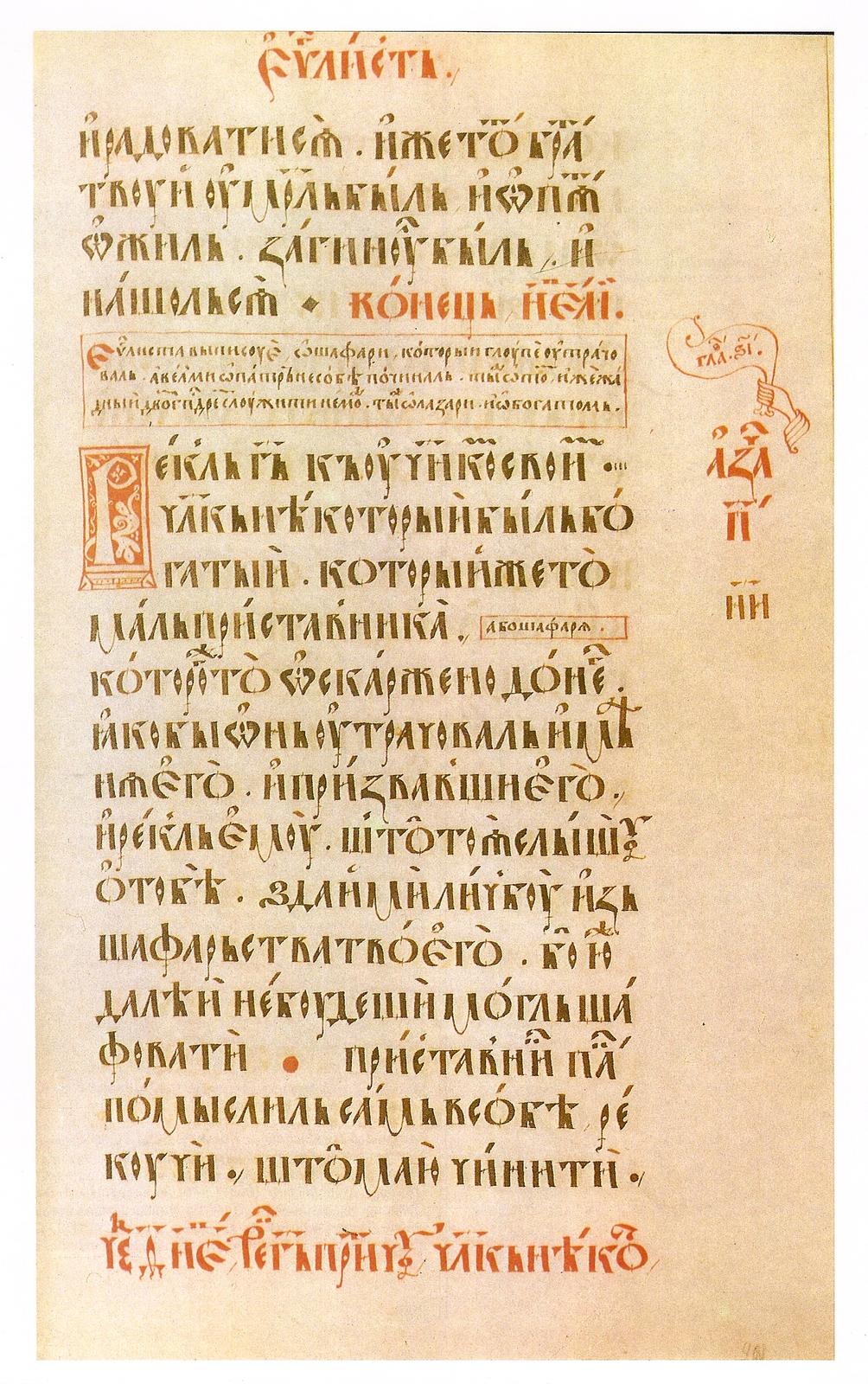
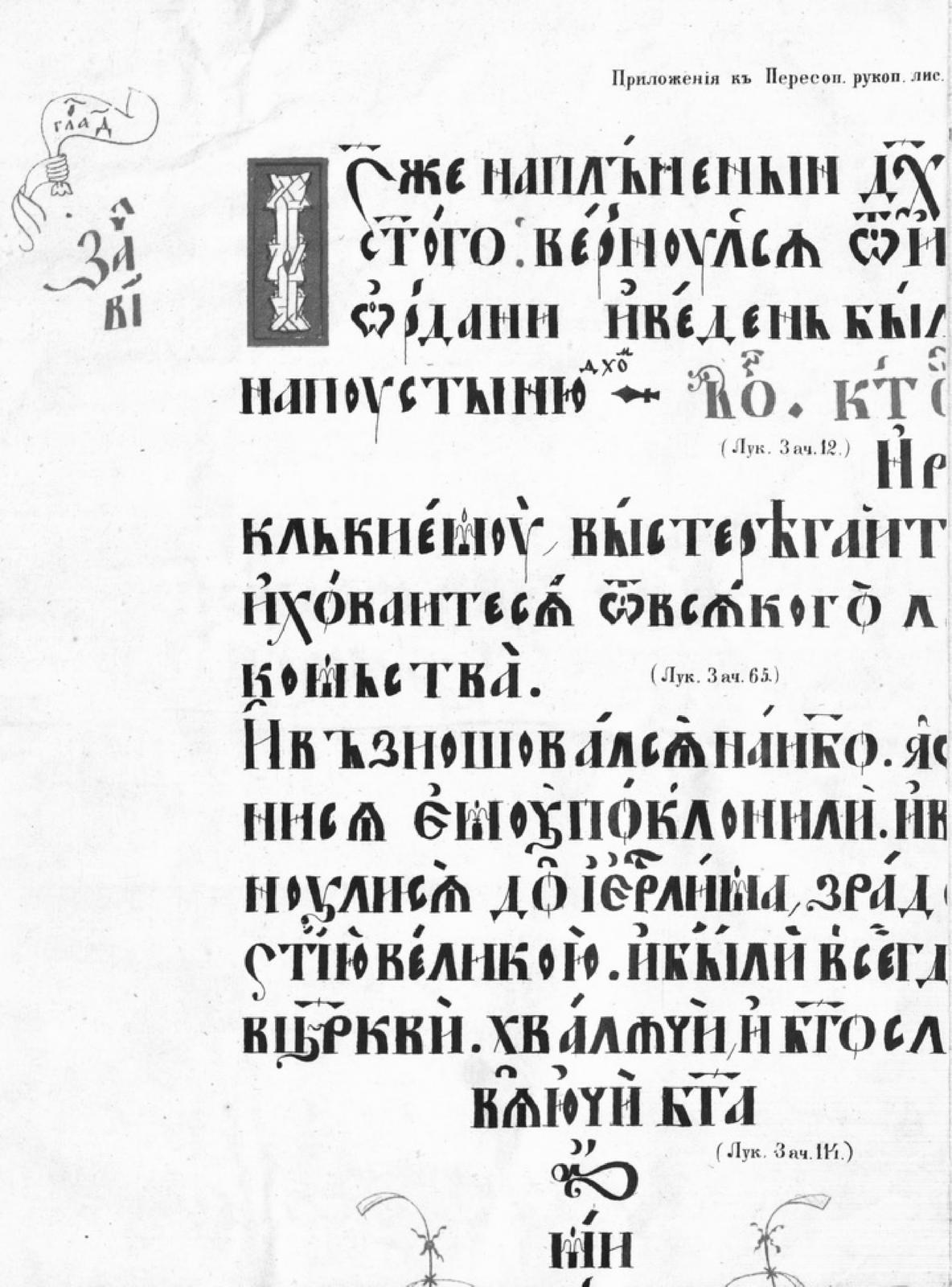
What it claims to be. The colophon’s most quoted sentence says the Gospels were set out «from the Bulgarian language into the Rus’ language» (изь ꙗзыка блъгарского на мову роускоую), «for the better understanding of the common Christian people». «Bulgarian» here means Church Slavonic, the inherited liturgical language [Brockhaus–Efron, «Библейские переводы»]. Zhytetsky found in 1876 that Matthew and Mark stay close to the Slavonic original, while John and especially Luke lean towards the spoken language. Often a framed marginal or interlinear gloss offers the everyday word next to the bookish one [Zhytetsky 1876, p. 4].
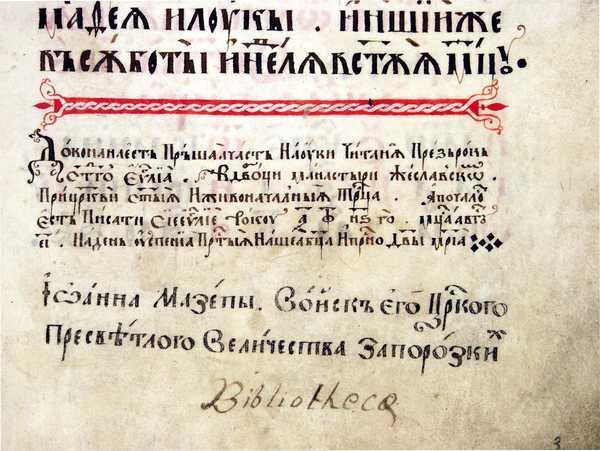
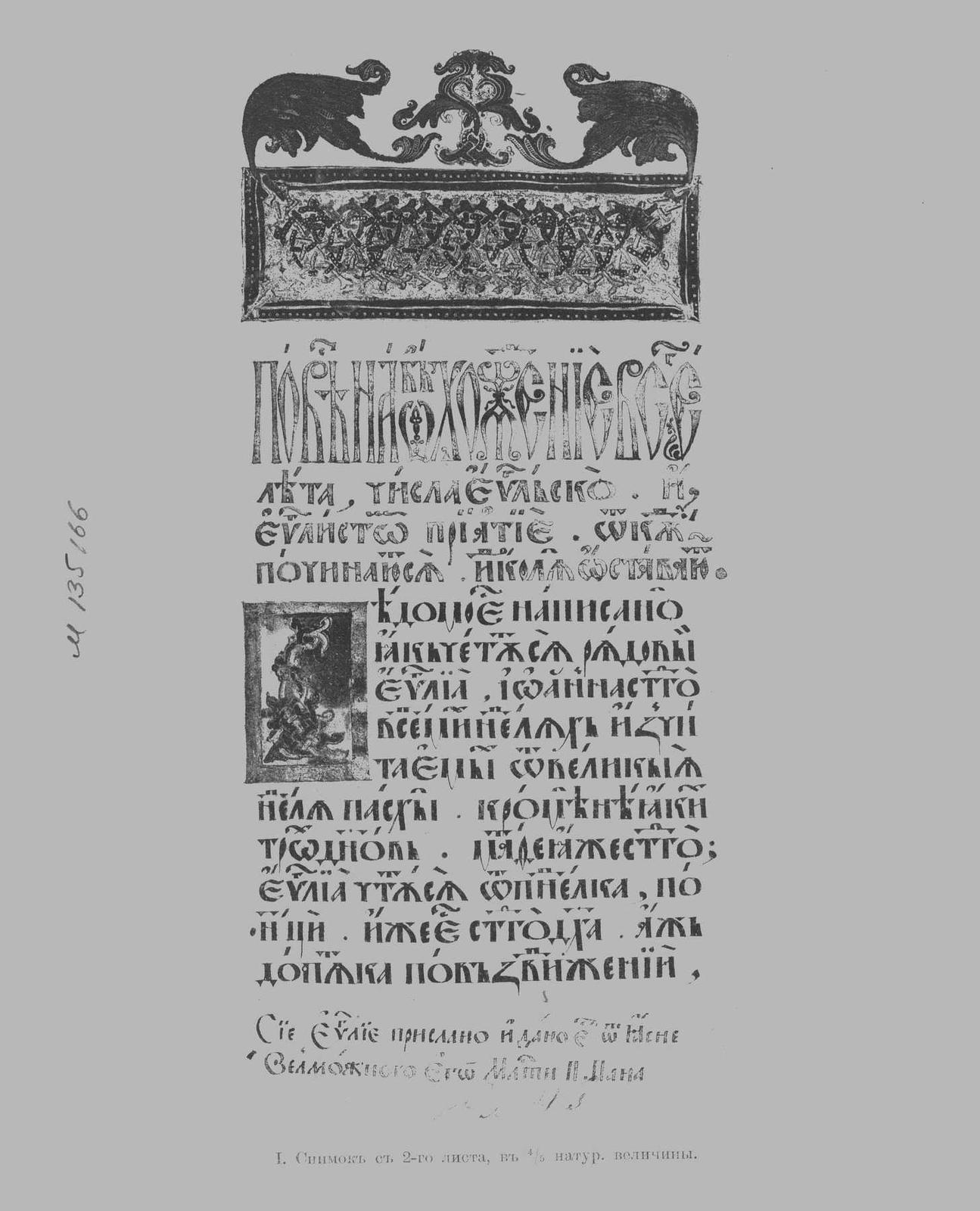
Why it sits beside Skaryna. Skaryna printed his Bible in Prague in 1517–1519 for «people of the common Rus’ language». Forty years later, the Peresopnytsia workshop pursued the same goal by the older means: one copy, written and painted by hand, with no press. Zhytetsky set the two purposes side by side as early as 1876 [p. 2]. Skaryna’s pages could be multiplied. This book was made once and became a relic. Hetman Ivan Mazepa’s inscription appears on f. 3 (see the first image below). Osyp Bodiansky announced the rediscovered manuscript in 1838 [p. 1, n. 2]. Since independence, Ukrainian presidents have taken their oath on it [KPI][SESDIVA].
Read the whole book. Page images of the complete manuscript are online: NBUV «Ukrainica» digital library (rights reserved by the library); Internet Archive: the 2008 facsimile edition, all 482 folios; Internet Archive: the four Gospels as separate files. We link to these and do not copy them.
The original text
What follows is the manuscript’s own wording in its own spelling. It comes from the two public-domain witnesses we could read line by line: the typeset quotations and the full edition of Luke in Zhytetsky’s 1876 study, and the hand-drawn facsimile plates in the same book. Each line records its source. The conventions are at the foot of the sheet.
Запись писца на л. 3 (1557)Scribe's first note, f. 3
Доконана есть пр’ша часть Наоуки читанѧ през рокь ст҃ого еѵ҃лиа. В’ двоци (sic) мана-
стыри жеславско҃ при ц҃кви ст҃ыѧ И живоначал’ныѧ тр҃ца. А почало҃ есть Писати сіе еѵ҃ліе рокоу
҂аф҃нѕ го м҃ца авгу҃ е҃і. на день оуспен[?]а пр҃тыѧ нашеа б҃ца И пр҃но д҃вы м҃ріа.
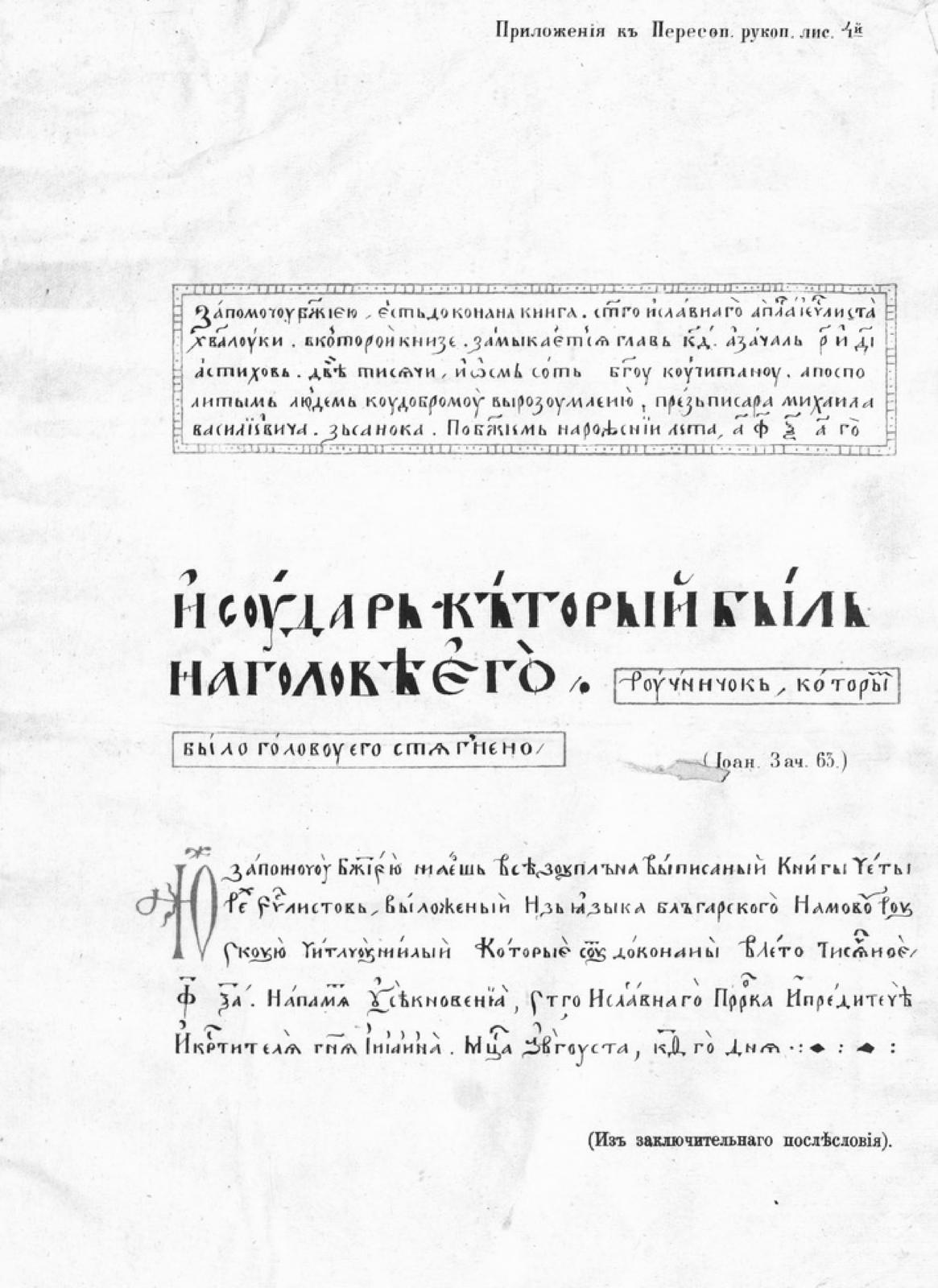
Из заключительного послесловия (л. 481 об.–482 об.)From the closing colophon
Lines 4–8: the 1876 lithographic facsimile of the colophon's opening, transcribed from the plate.
Юж за помочоу б҃жіею маешь всѣ зоуплъна выписаный книгы четы-
рех еѵ҃листовь, выложеный изь ꙗзыка блъгарского на мовоу роу-
скоую чит[?]оу милый. которые соу҃ доконаны влето тисѧ҃ное
ф҃ ѯ҃а. на памѧ҃ оусѣкновеніа, ст҃го и славнаго прорка и предитечѣ
и кр҃тителѧ г҃нѧ іоанна. м҃ца авгоуста, к[ѳ]҃ го днѧ.
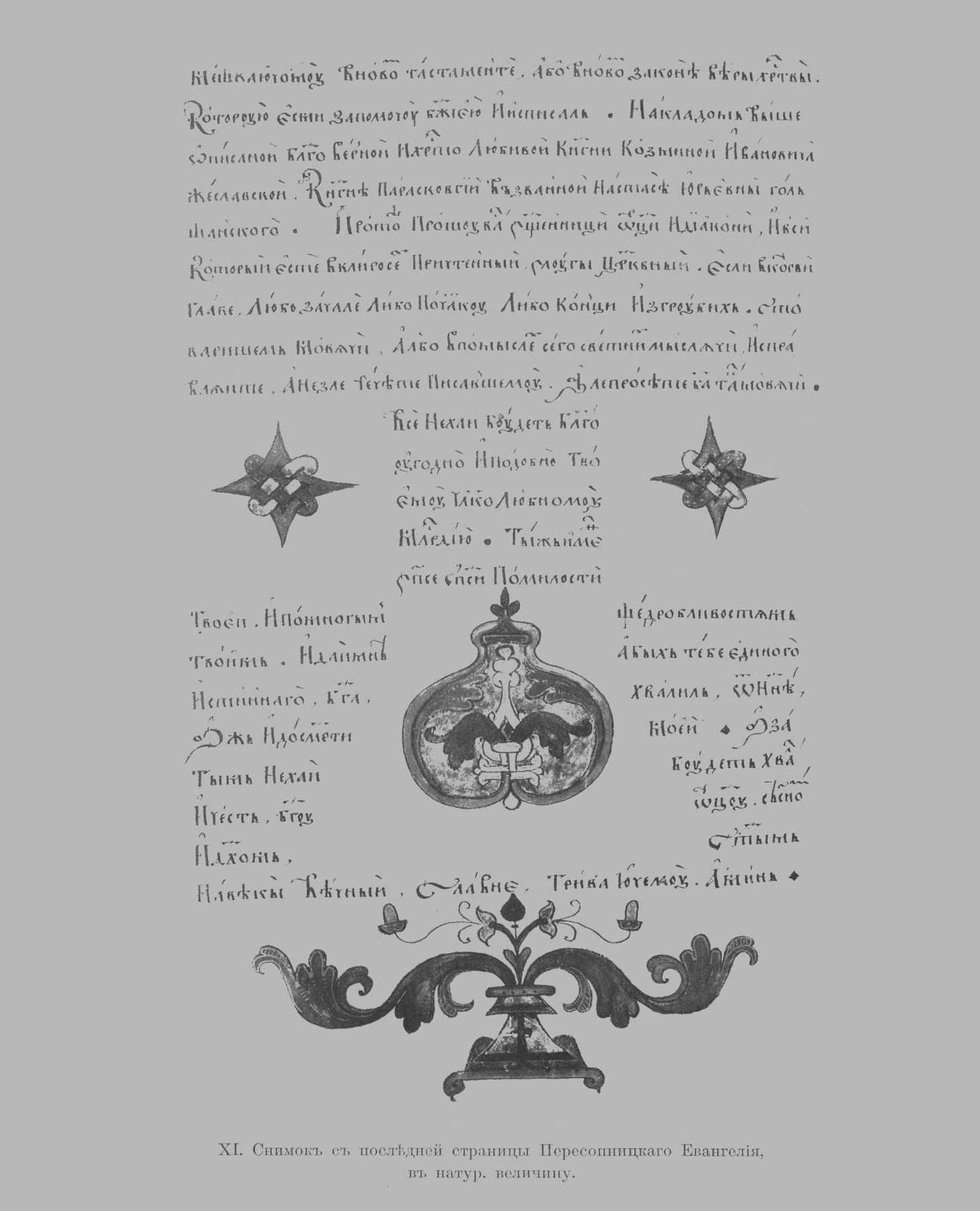
Lines 9–21: further sentences of the same colophon as Zhytetsky quoted them in type (1876, pp. 1–2).
тыи книги чтыры еѵ҃листове со҃у оустроены кро҃кымь смирейнымь и б҃голюбивымь еромонахо҃ Григорые҃ Архимандритомь Пересопницкимь
Тое все, […] Радою Пил’ностю и прилежаніемъ Вышше Речейного, Монаха Григоріа, Архимайдрита Пересопницкого, Постановлей е҃.
Прото Иже есми еще недооумемь пренесталость Розоума Моего.
Былбо мои розоумь втыѧ д҃ни Моутень ꙗко Воды врекоу Приходѧщіи Изгорь.
И ꙗко Пла[?]ный Былины ѿ вѣтровь колевлемы. длѧ Троски сего мимо Идоучого свѣта.
Протожь Вышеречейный смирейный архимайдрить Григоріе Имель Пил’ность и любовь кписанію сеи книгы.
котора длѧ пил’ности и любве его свръшиласѧ… ꙗ тыжь многогрѣшный… того тыжь наоучень…
Похотель есми Написати сію книгоу ст҃ую еѵ҃лію
зане Григоріи … Нелюбиль злата и сребра Тлеющихь
видѣти дѣла сего конець. И почитати внемь начерьтайна Писмена
А иже есть прекладана Таѧто ст҃аа еѵ҃ліа изь ꙗзыка Бл’гарскаго на мовоу
Роускоую, то длѧ лѣпшо҃ вырозоумленѧ людоу хр҃тіанского посполитого
влето тисѧ҃ное ф҃ ѯ҃а Авгоуста к҃ѳ-го днѧ
Послесловие к Евангелию от Луки (л. 335, 1561)Afterword to Luke
За помочоу б҃жіею, есть доконана книга. ст҃го и славнаго ап҃ла і еѵ҃листа
х҃ва лоуки. в которои книзе. замыкаетсѧ главь к҃д. а зачаль р҃ и д҃і
а стиховь. двѣ тисѧчи, и ѡсмь соть б҃гоу коу читаноу. а поспо-
литымь людемь коу добромоу вырозоумленію, презь писара михаила
василіевича. зь санока. По б҃жіемь нарожении лѣта, а҃ ф҃ ѯ҃ а҃ го
Евангелие от МатфеяThe opening of Matthew (1:1–2)
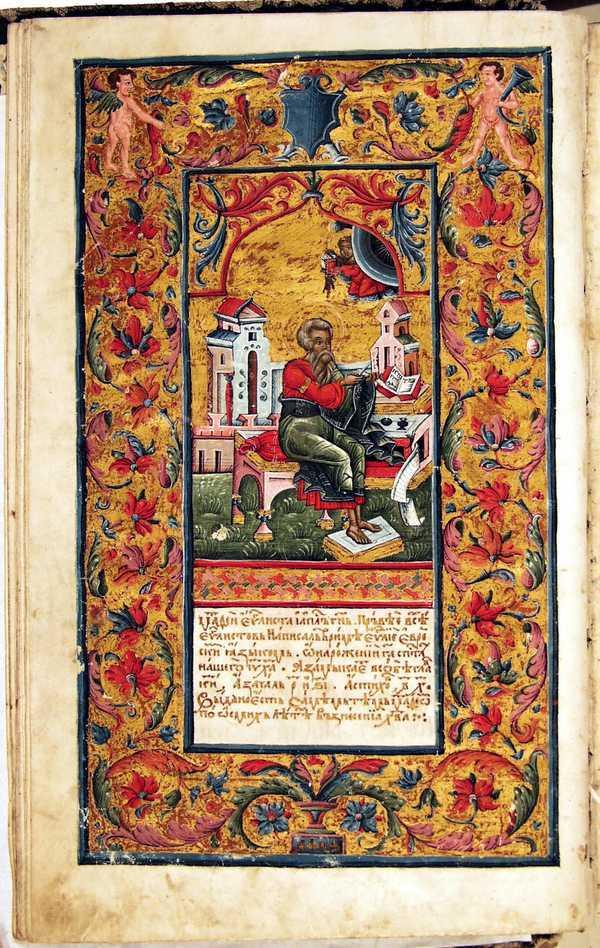
Зач. 1. книги ро҃ства і҃[?] х҃ва с҃на д҃ва с҃на авраамлѣ… авраамь сп҃лодь исаака исаак҃ же
сп҃лод҃ іакова іаков҃ же сп҃лод҃ іоудоу и братіѧ его.
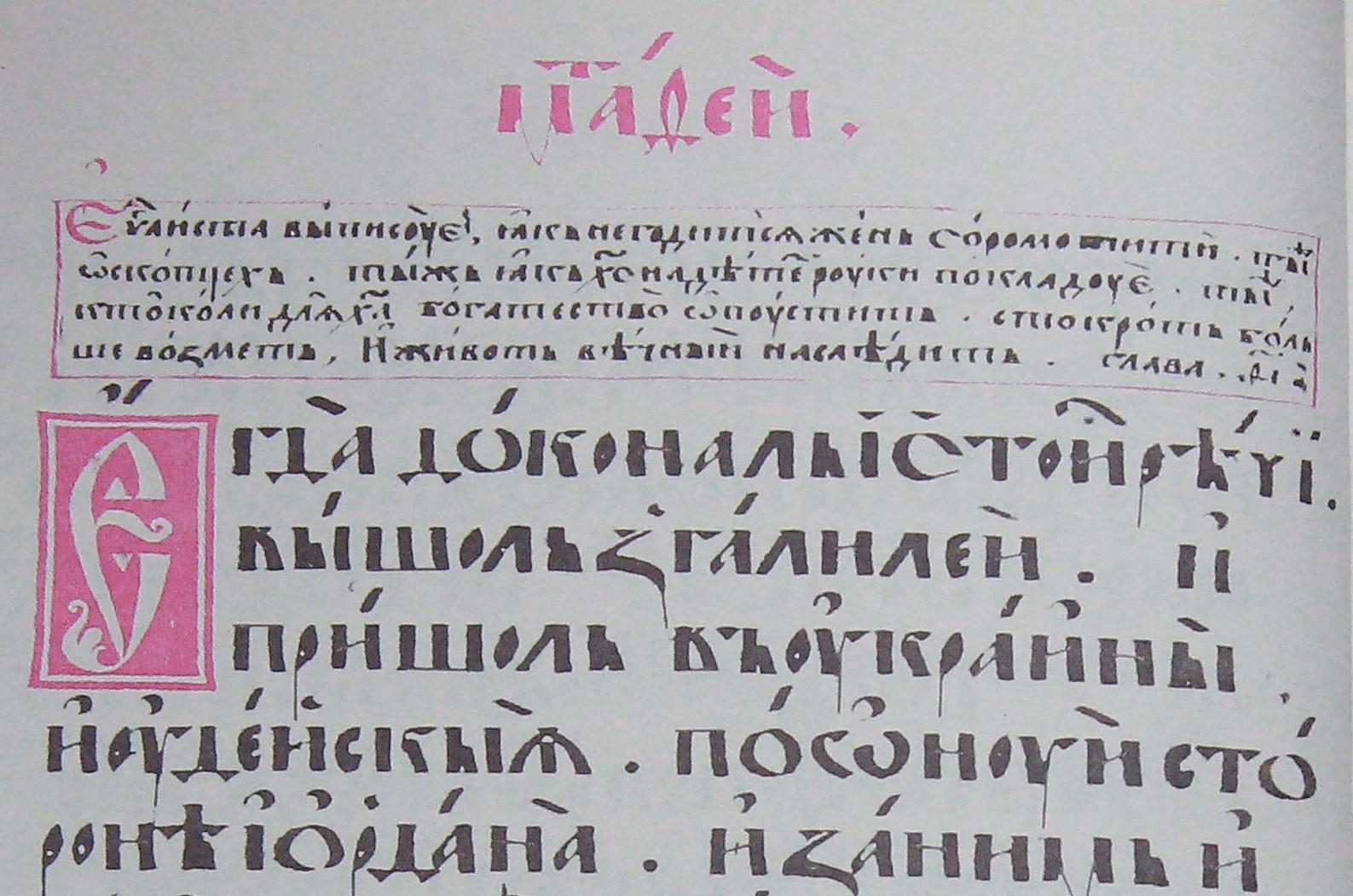
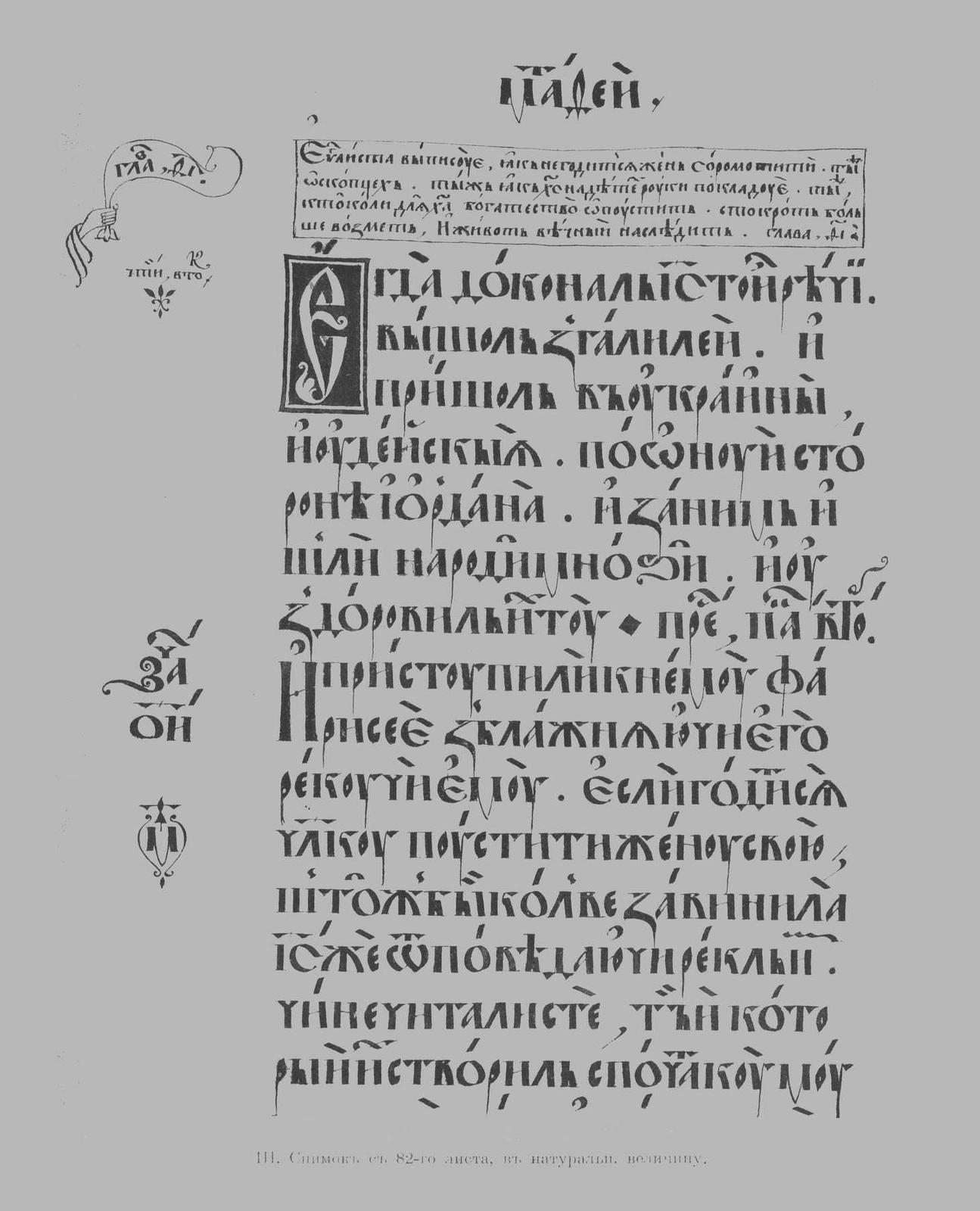
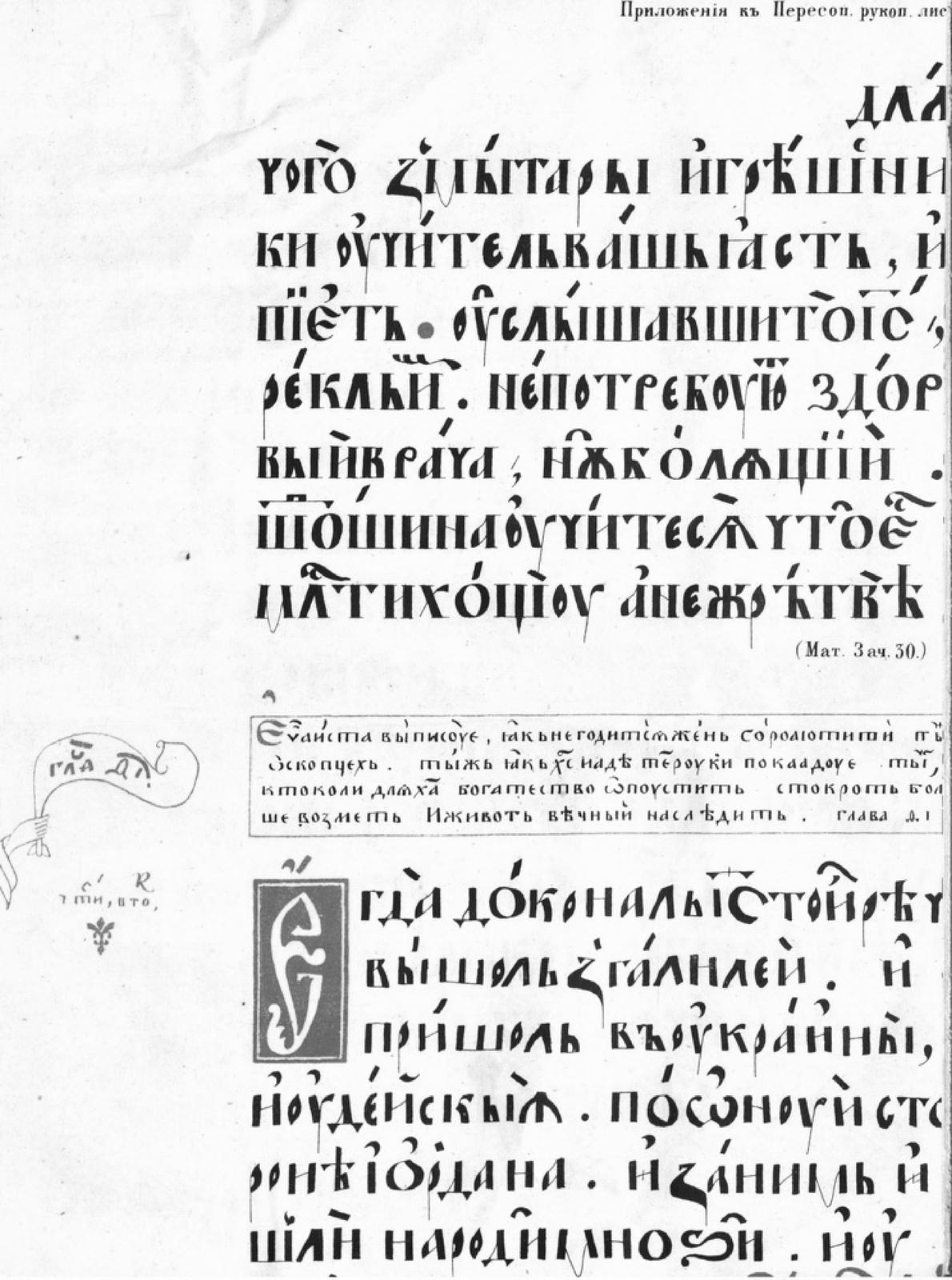
Matthew 19:1, the passage that renders "the coasts of Judaea" as "оукраины иоудейскыѧ", from the 1876 plate (the plate is cut at the right edge of line 1).
Егда докональ іс҃ тои рѣч[…]
вышоль з галилеи. и
пришоль въ оукраины,
иоудейскыѧ. по ѡноуи сто-
ронѣ іѡрдана. и за нимь и-
шли народи мно҃ги.
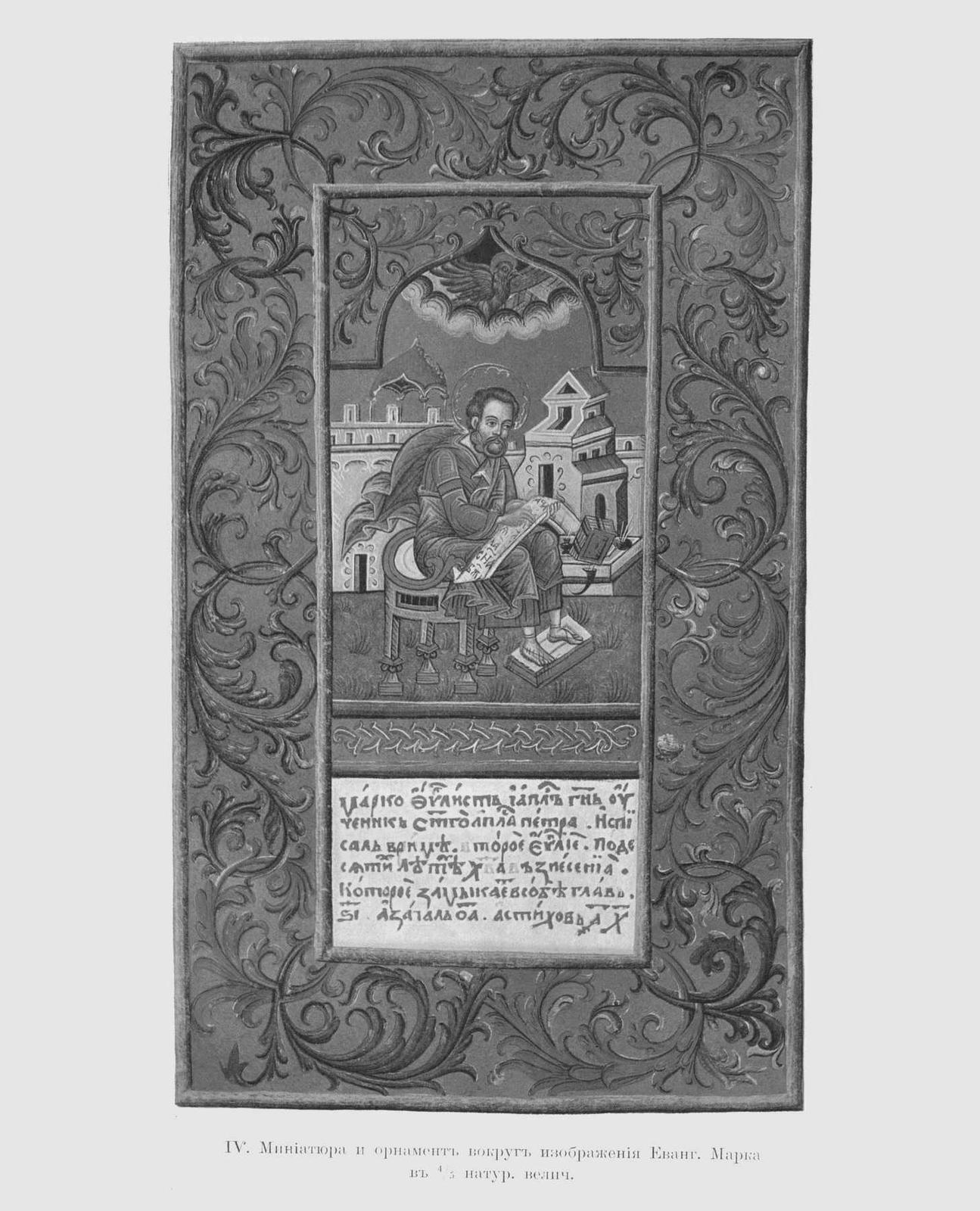
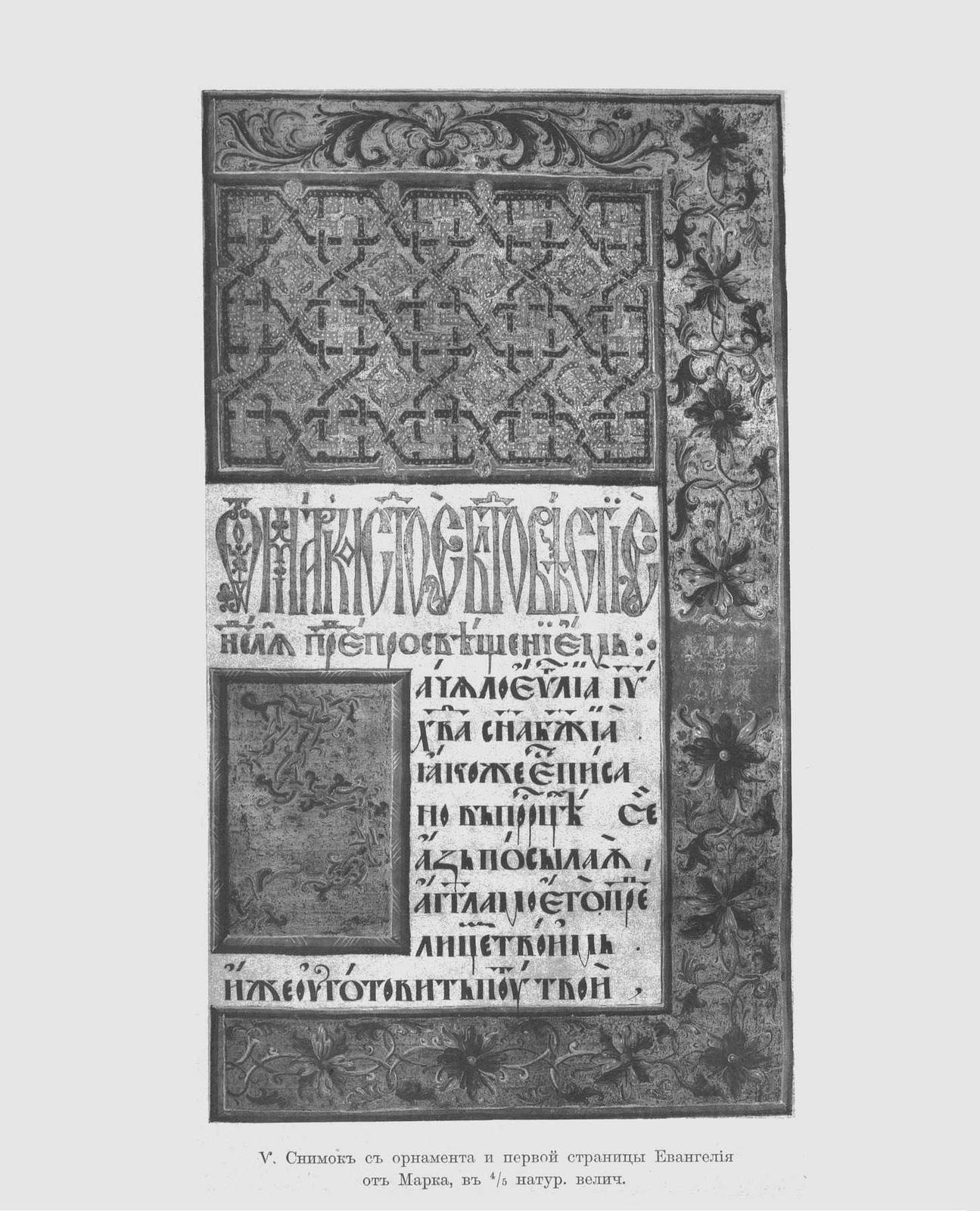
Евангелие от МаркаThe opening of Mark
No public-domain transcription of Mark 1:1 was found; the opening is given as facsimile only.
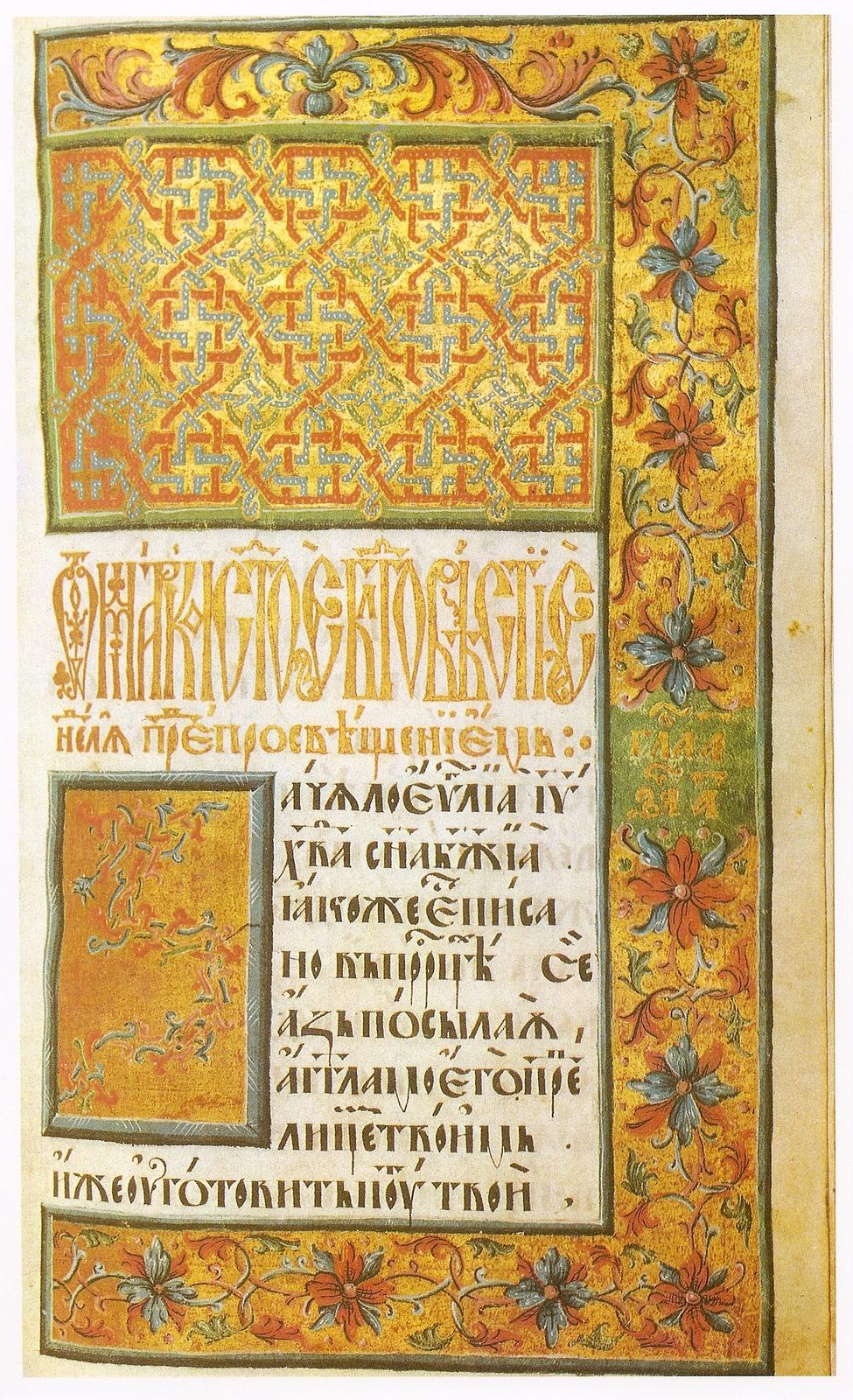
Евангелие от ЛукиThe opening of Luke (1:1–7)
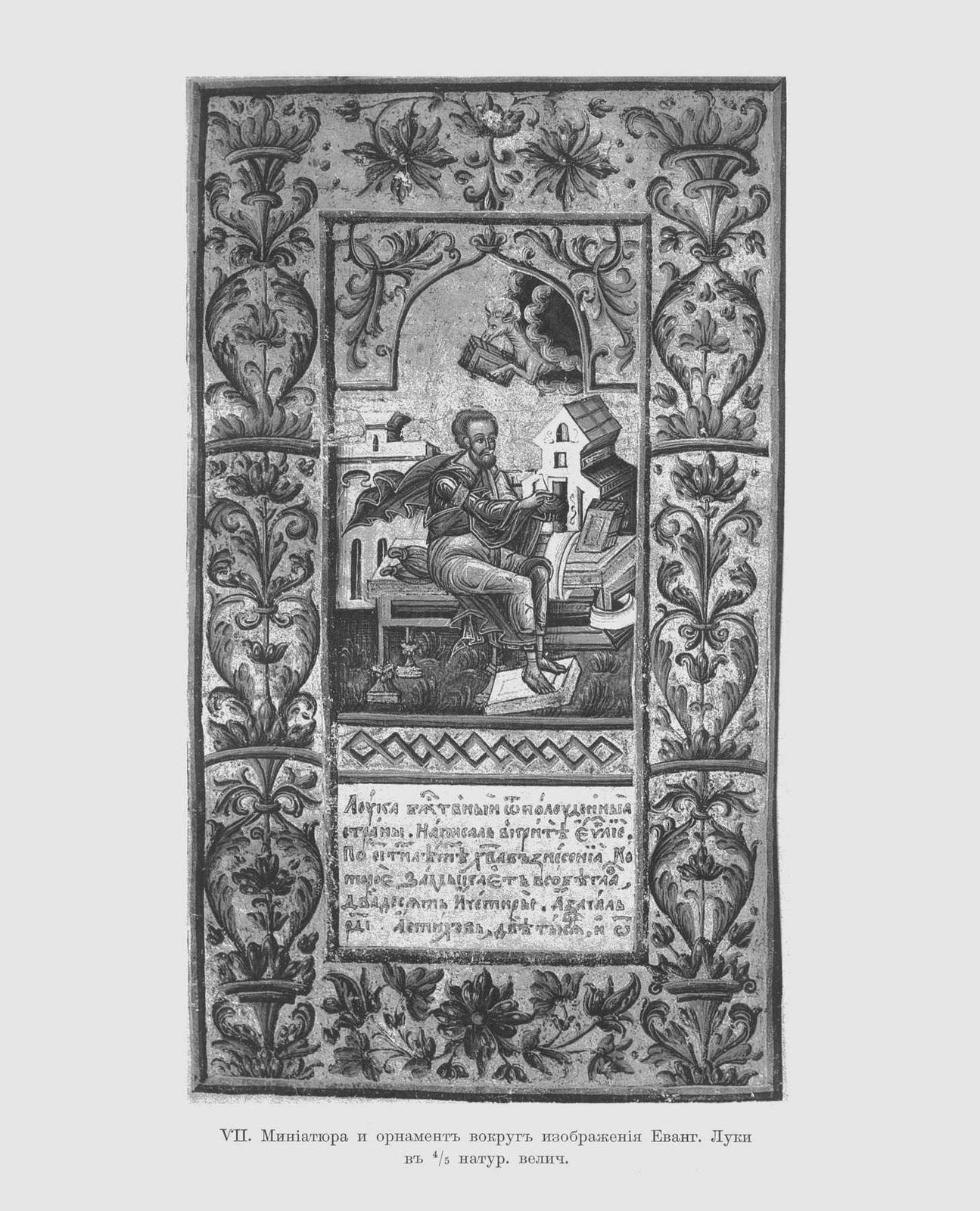
Лоука б҃жтвный ѿ полоуденныа страны. Написаль и[?] Критѣ еѵліе.
По е҃і т҃ лѣтѣ х҃ва възнесеніа которое замыкаеть всобѣ гла҃ двадесѧть и четиры. А зачаль р҃ді.
А стиховь, двѣ тысѧ҃и ѿ
Ѿ Луки ст҃го еѵ҃ліа чте҃е.
Понеже оубо мнози почали чинити повѣсти ѿ҃ извѣствовайныхь в нась вещехь. ꙗкоже
соуть намь выдали тыи который соуть сами видѣли аслоужебници тыхь рѣчіи были.—видѣ-
лосѧ и мнѣ который же есми ажь испочатькоу спил’ностю все по рѧдоу выписаль велможны҃
дръжавны҃, ѳеѡфиле. абы еси выдаль прайдоу тыхь словь и тыхь рѣчіи внихьже еси наоу-
чень быль.
Зачало в҃.
Быль пакь за дн҃овь ірода цр҃ѧ іоудейского нѣꙗкый іерей которомоу то было имѧ
захаріа исьдн҃евныѧ чрѣды авіанѧ. а жона его была ѿ дъщеріи ароновѣхь. которой то
было имѧ іелисавеѳа.—абыли ѡбое справедливы҃ перѣ҃ б҃гомь. иходили въ всѣхь заповѣдехь г҃нихь
(безприганы) безь порока. и небыло вних плодоу. прото ижь іелисаветь была неплона. и ѡбое
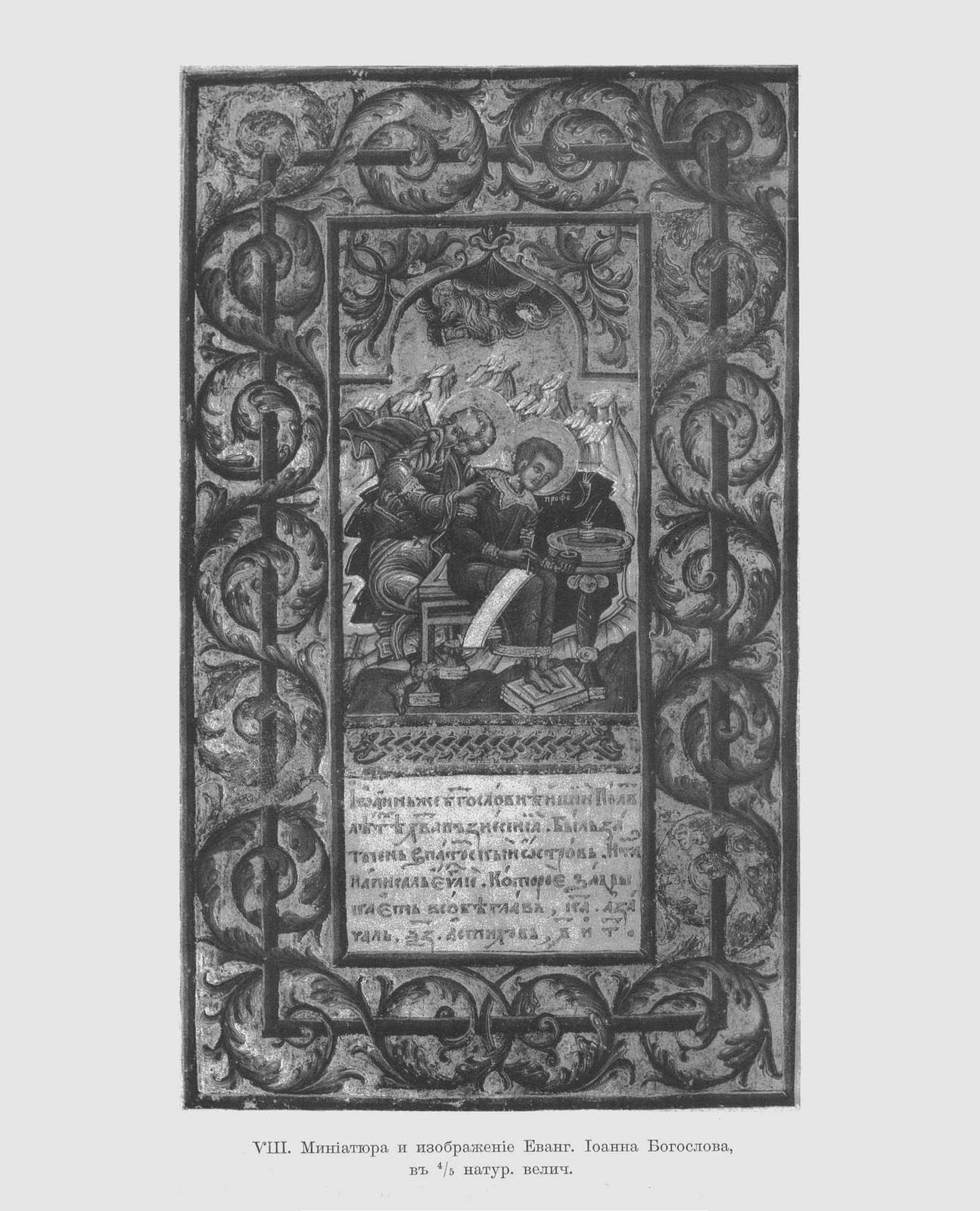
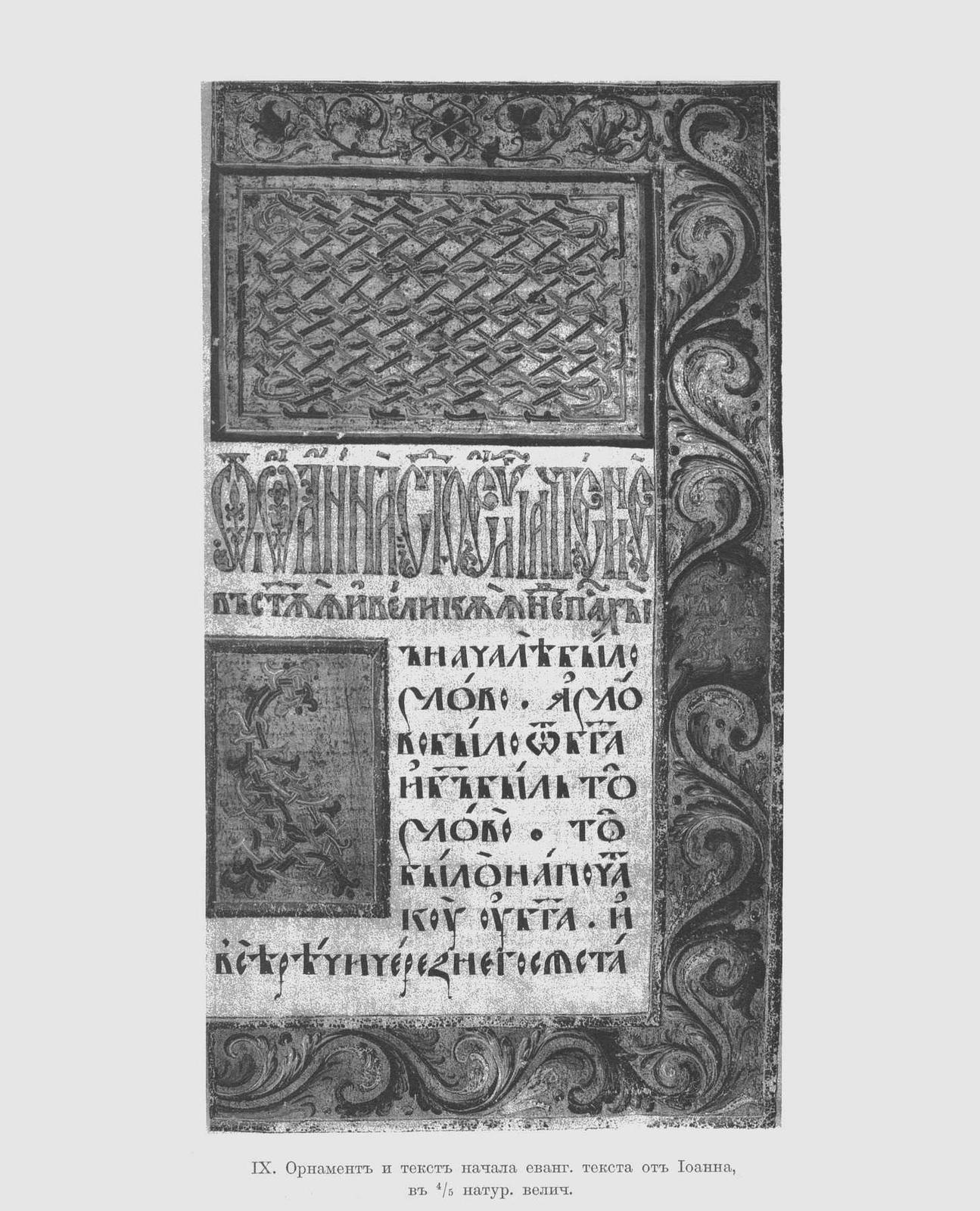
Евангелие от ИоаннаThe opening of John
The last sentences of the preface to John, which the Peresopnytsia text adds to the usual preface. John 1:1 itself has no public-domain transcription here; see the facsimile.
А коли южь тое такь есть, мы почнѣмо. штожь есть вь писаніи речейно вь началѣ было слово. А за тымь нехай боуде хвалено имѧ
б҃а ѡ҃ца на вѣкы царуючого зь единороднымь с҃номь и пр҃тымь д҃хомь аминь.
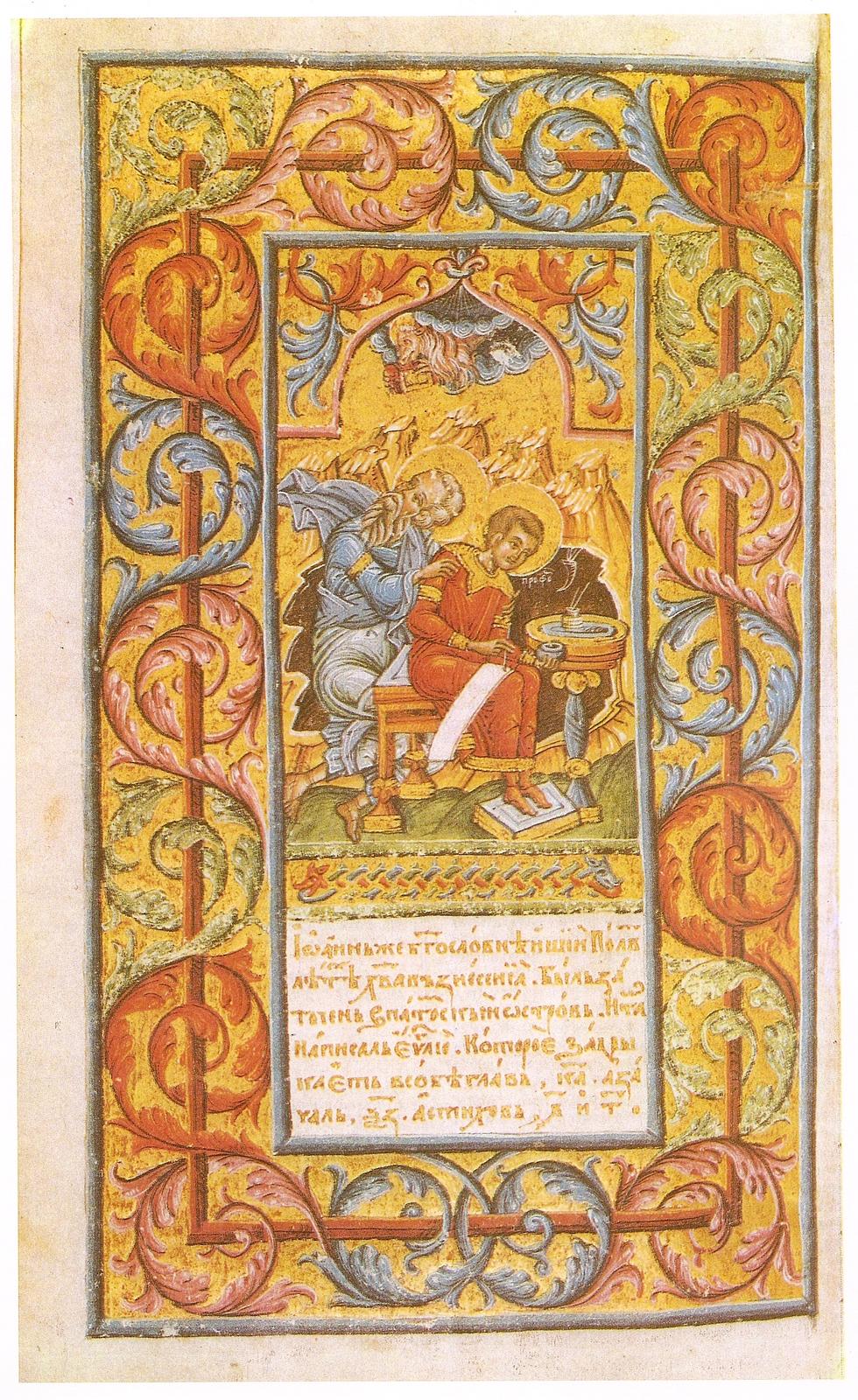
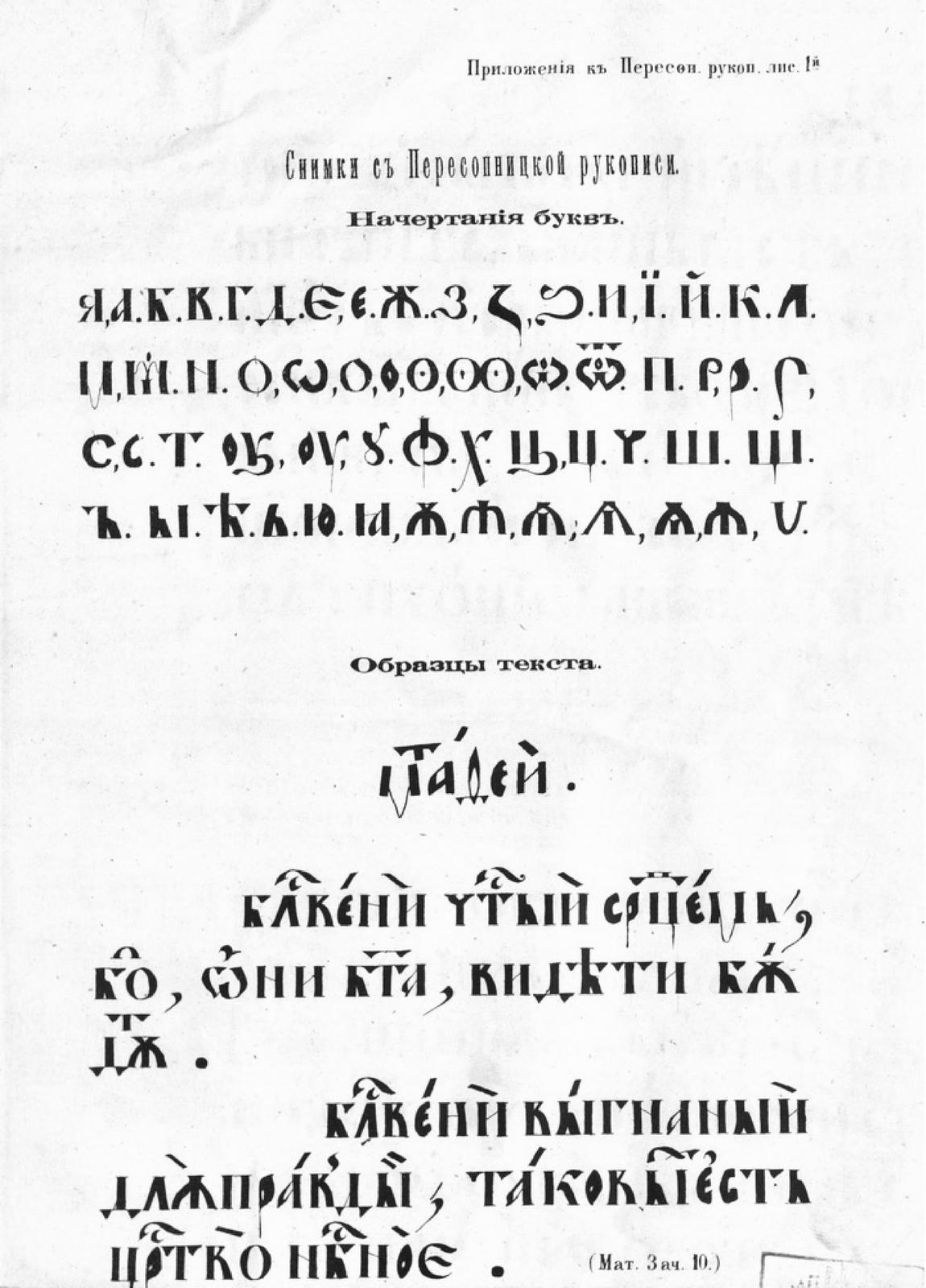
Provenance of every line. Lines 1–3: Zhytetsky 1876, p. 15. Lines 4–8 and 22–26: Zhytetsky 1876, lithographic plate 4. Line 9: p. 1. Lines 10–21: p. 2. Lines 27–28: p. 16. Lines 29–34: plate 2. Lines 35–37 and 49–50: p. 19. Lines 38–48: p. 25, the start of Zhytetsky’s full edition of Luke. Source: П. И. Житецкий, Описаніе Пересопницкой рукописи XVI в., Кіевъ 1876, public domain (Wikimedia Commons, Internet Archive). Each line was read by eye from the page scans and typed in. No line comes from a modern edition.
Conventions. Letters as printed; е and є are not distinguished. ҃ marks a titlo or a superscript letter that the scan does not let us identify; a legible superscript letter is shown raised. Stress and breathing marks are omitted, and the paerok is shown as ’. [?] marks a letter unreadable in the scan; […] marks words of the 1876 editor left out, or a plate cut at the edge. Word division on the plates is normalised. At line 8 the plate’s day numeral looks like д; Zhytetsky’s typeset reading (line 21) is кѳ, the 29th. The openings of Mark and John have no public-domain transcription here and appear as facsimiles only.
Facsimile gallery
More plates and pages beyond those set into the text above. Click an image for full size (at most 1600 px).
-
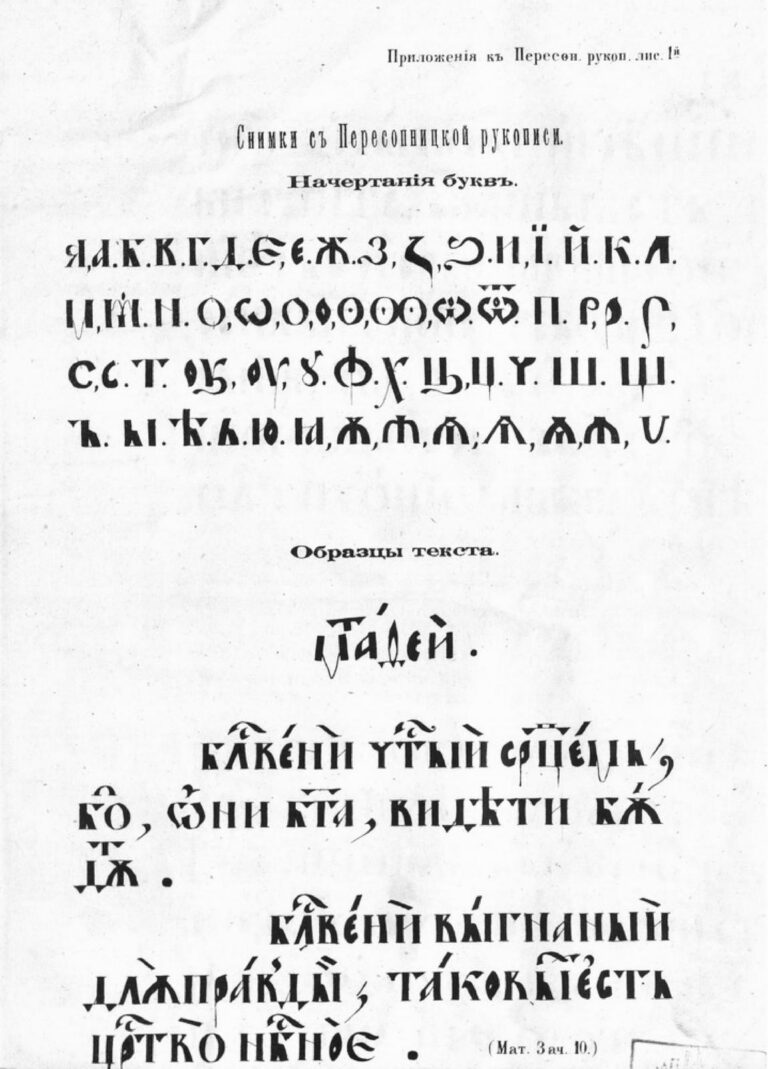
Начертания букв и образец устава · литография Житецкого, 1876 · табл. 1 -
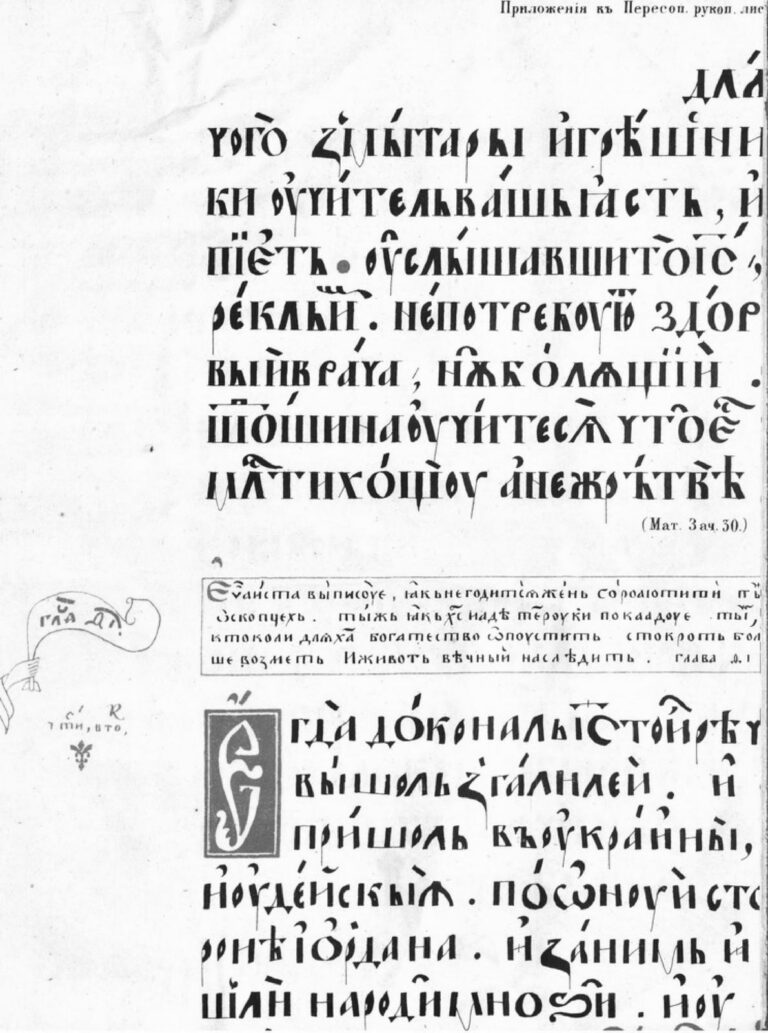
Мф 19:1 и краткое изложение в рамке · литография Житецкого, 1876 · табл. 2 -
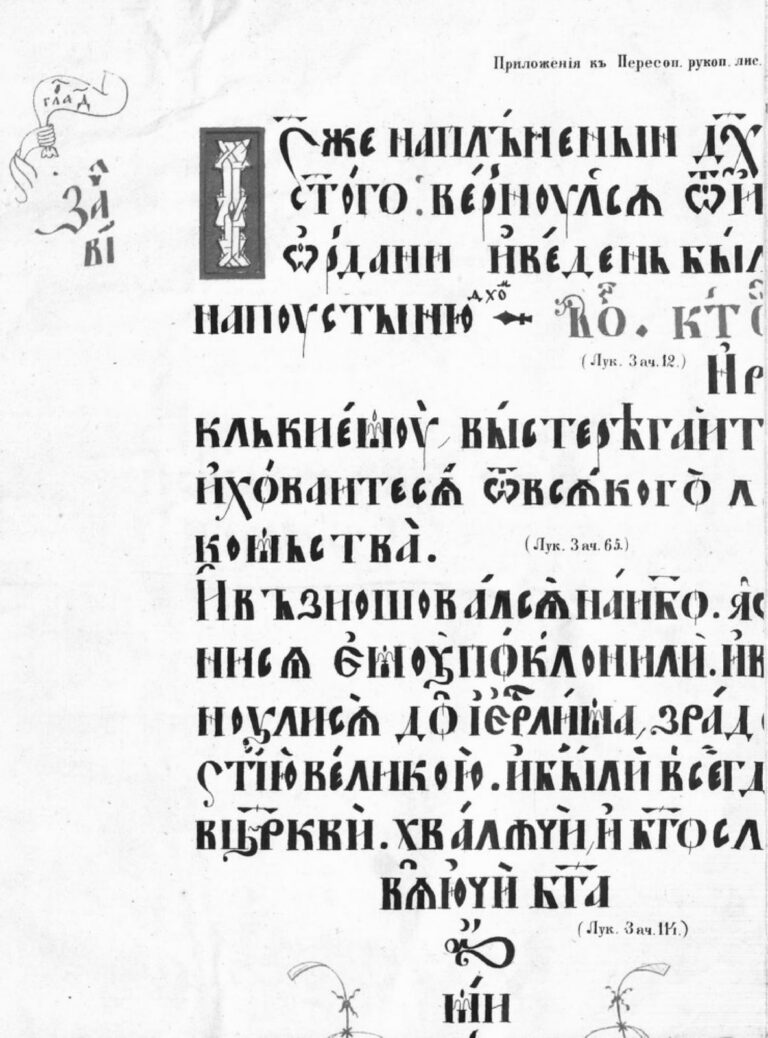
Образцы из Евангелия от Луки · литография Житецкого, 1876 · табл. 3 -
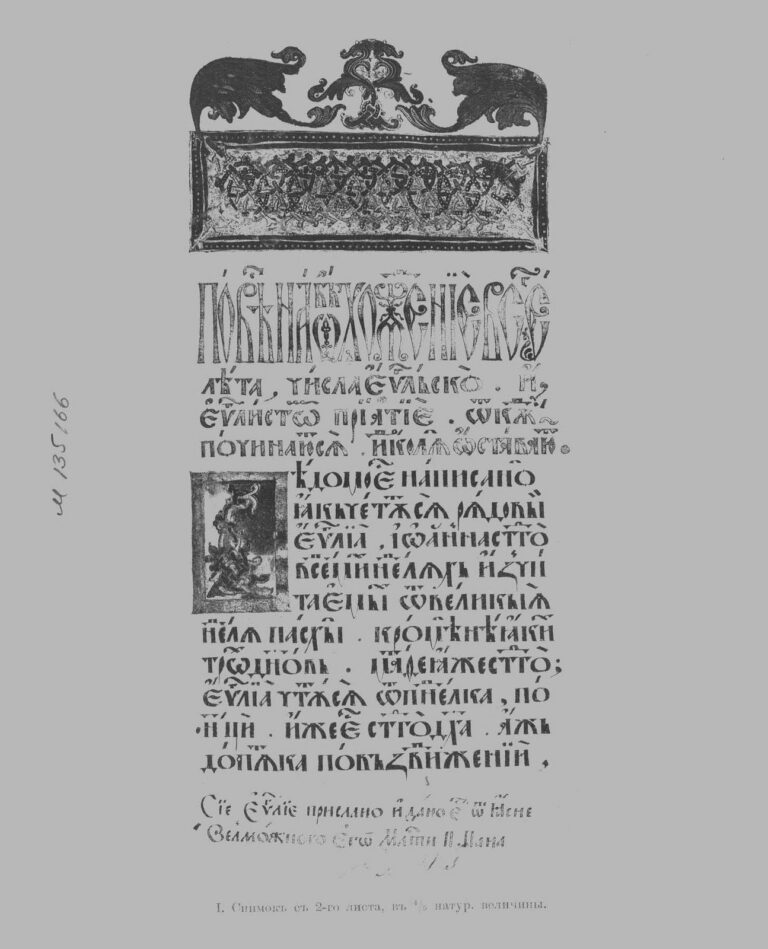
Лист 2 с заставкой и вязью · Грузинский, 1911 · табл. I -
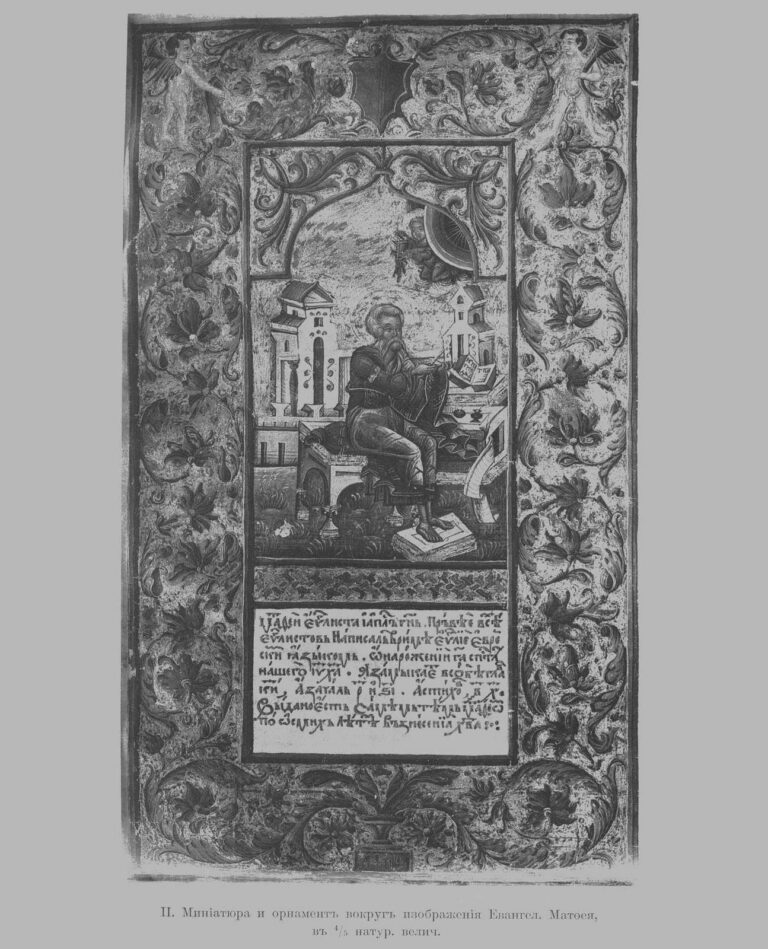
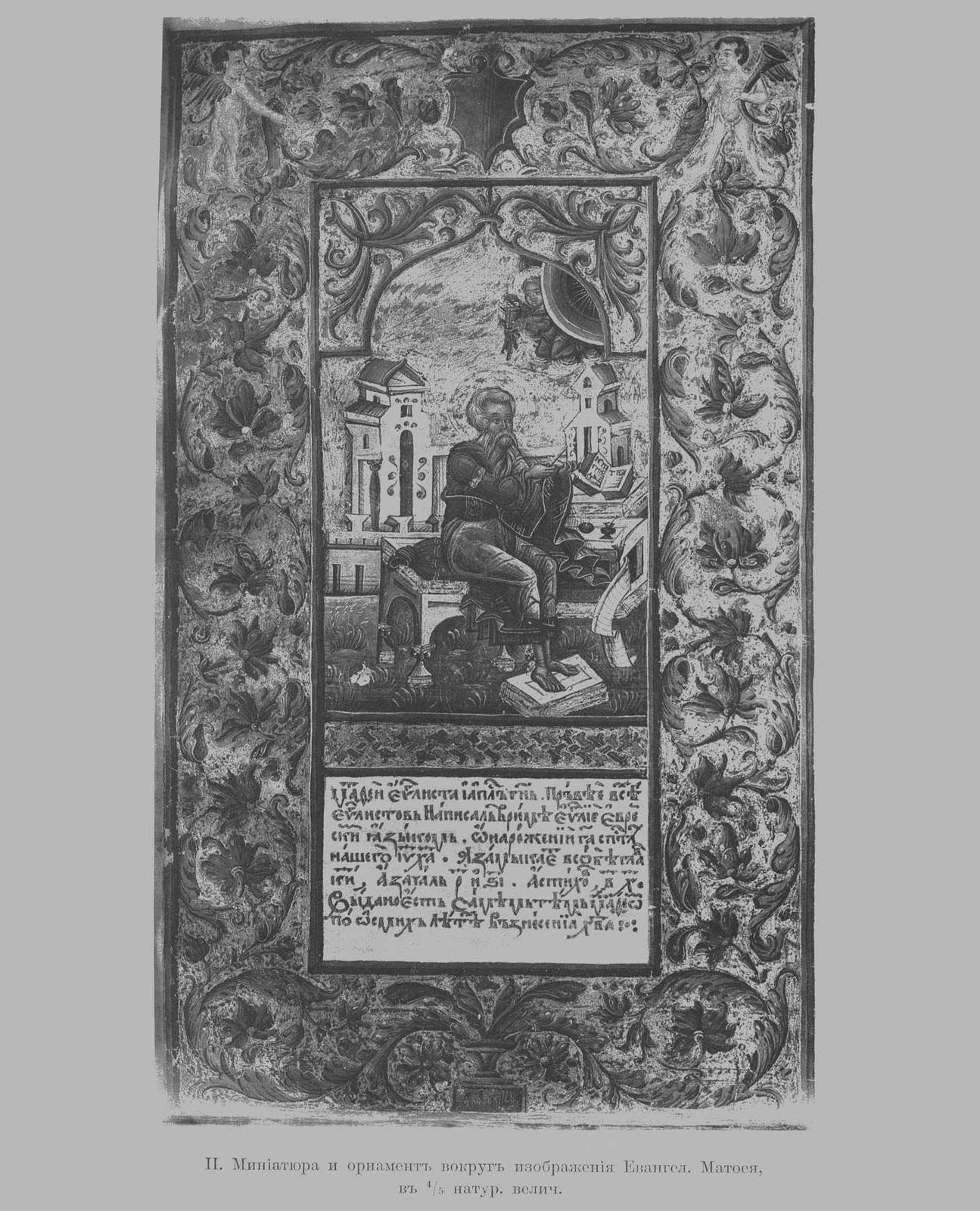
Миниатюра Матфея с орнаментом · Грузинский, 1911 · табл. II -
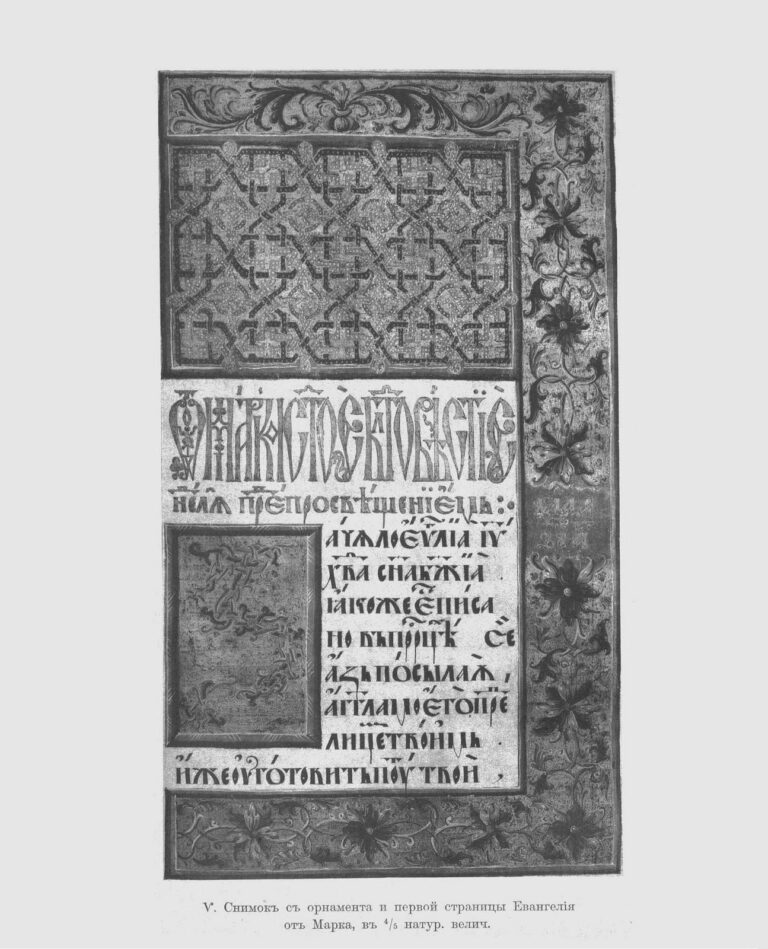
Первая страница Евангелия от Марка, л. 129 · Грузинский, 1911 · табл. V -
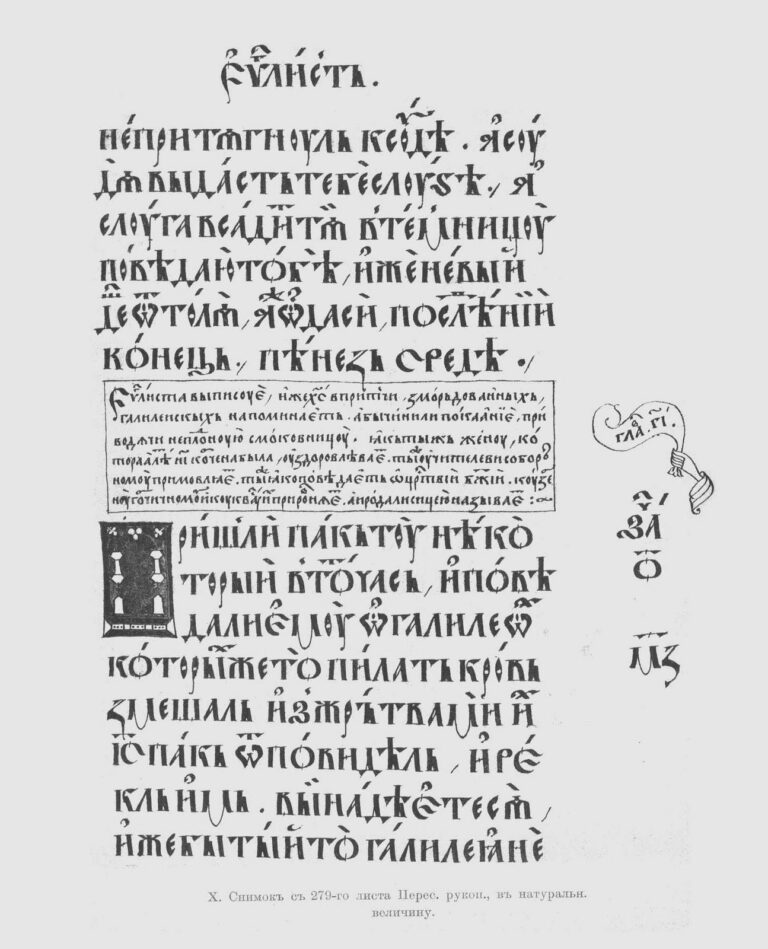
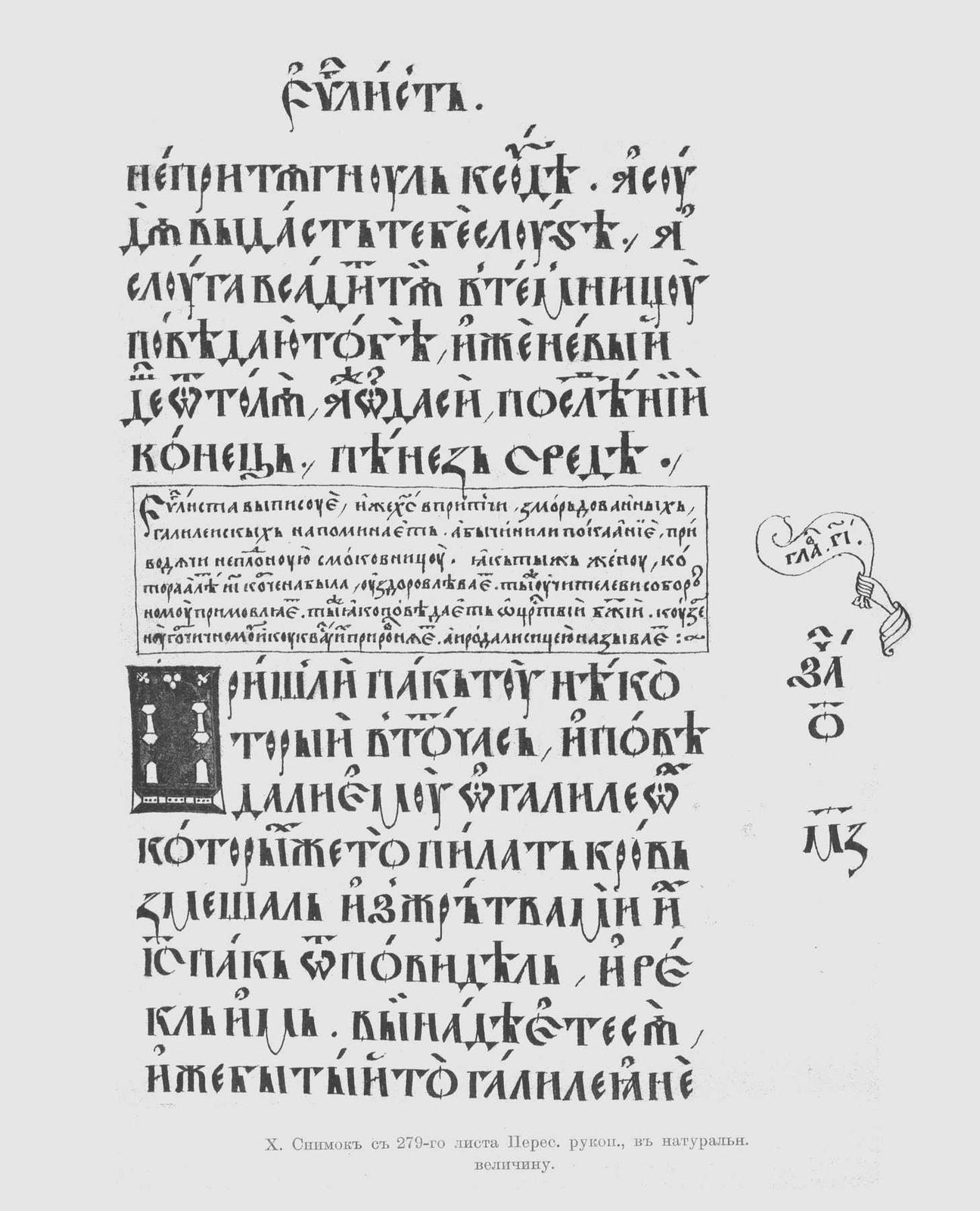
Лист 279 в натуральную величину · Грузинский, 1911 · табл. X -
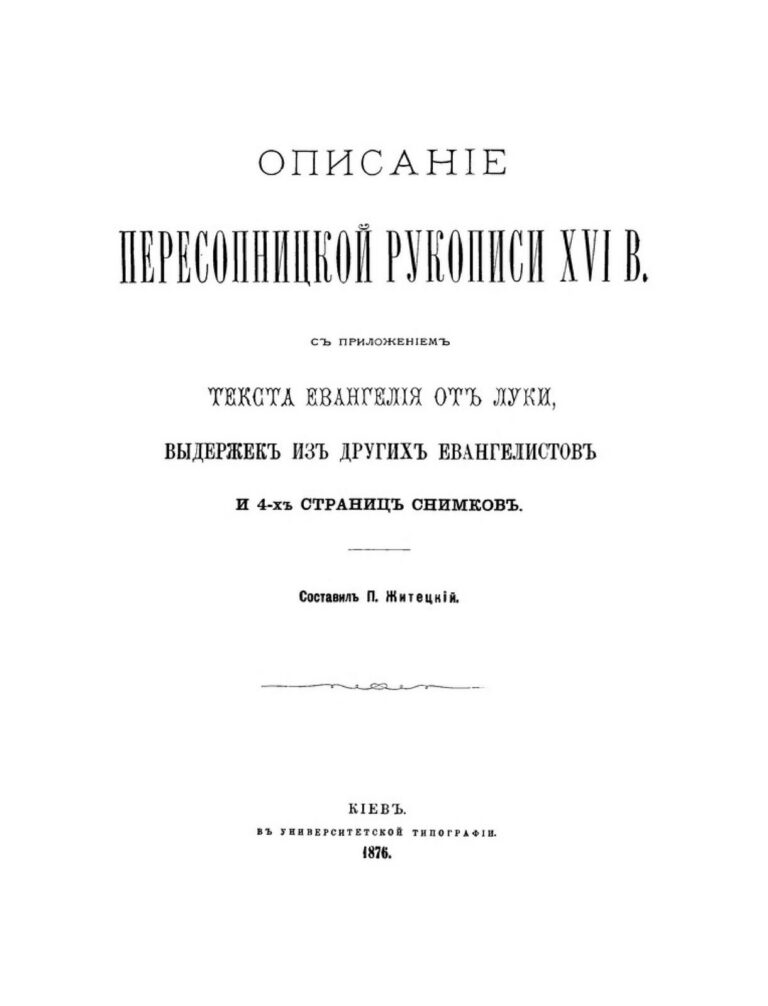
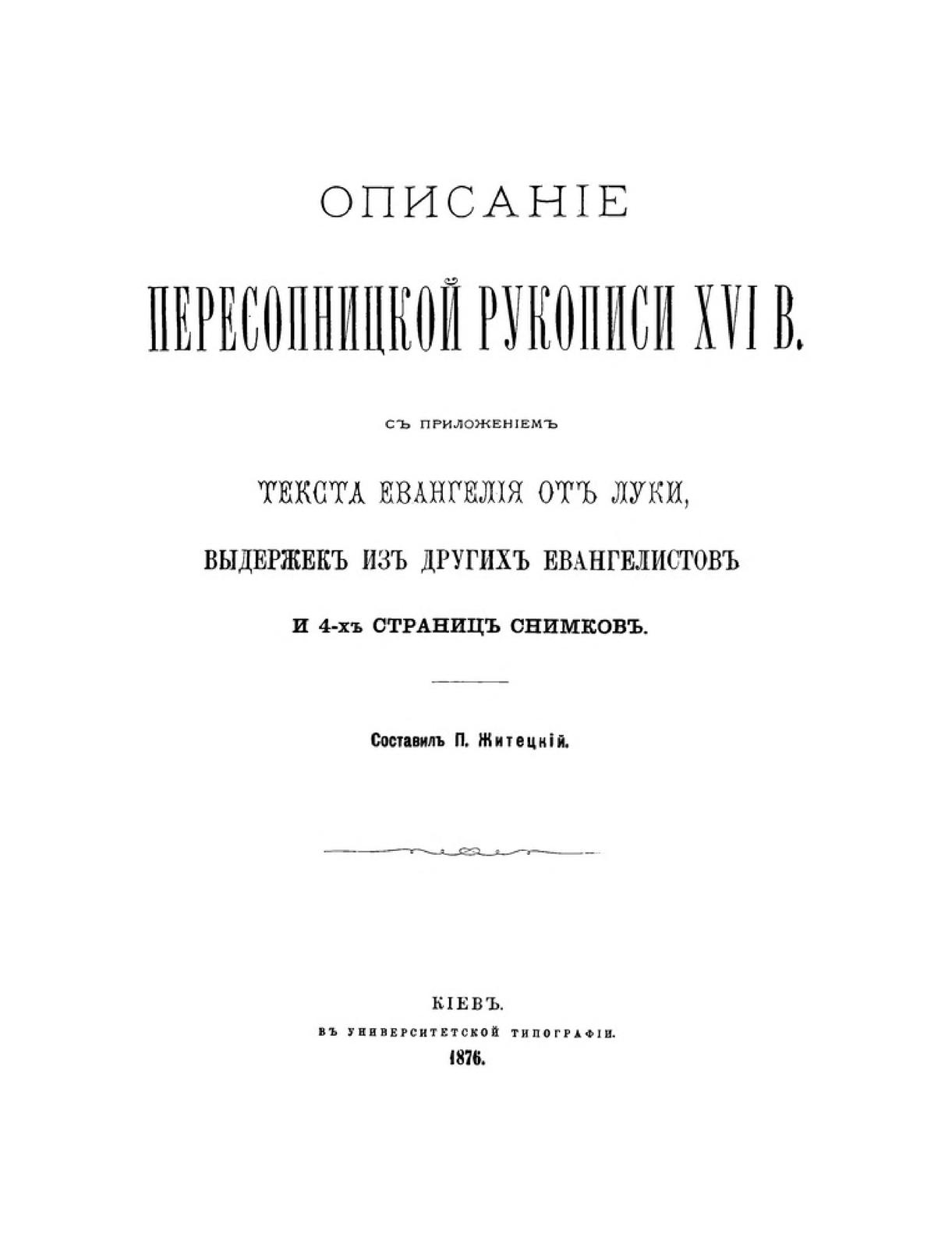
Титульный лист · Житецкий, «Описание Пересопницкой рукописи», 1876 -
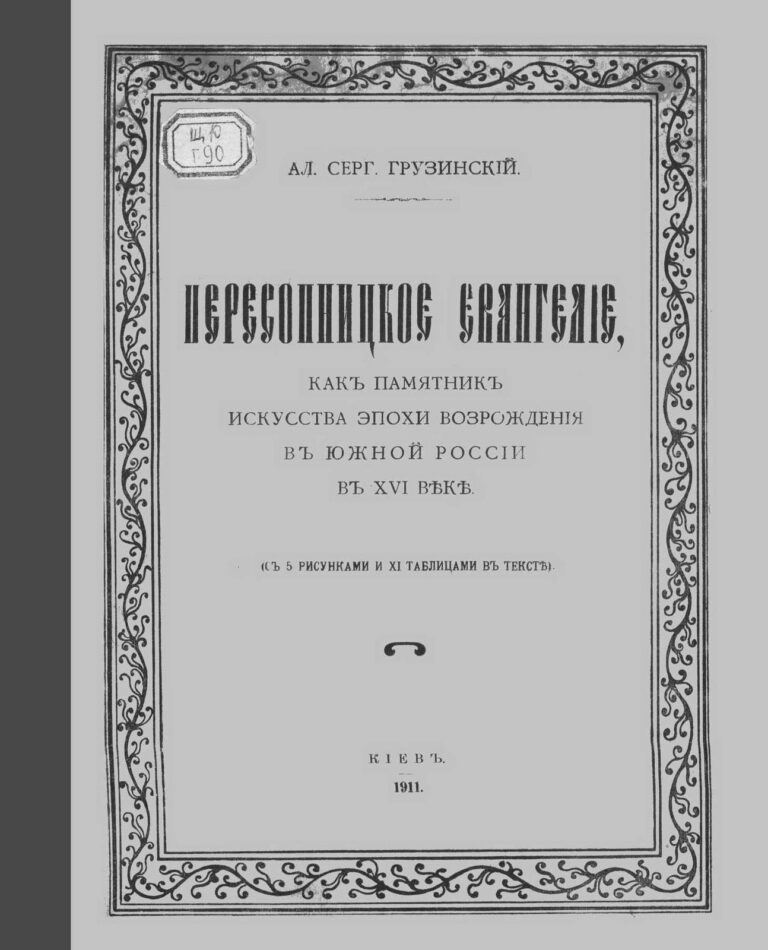
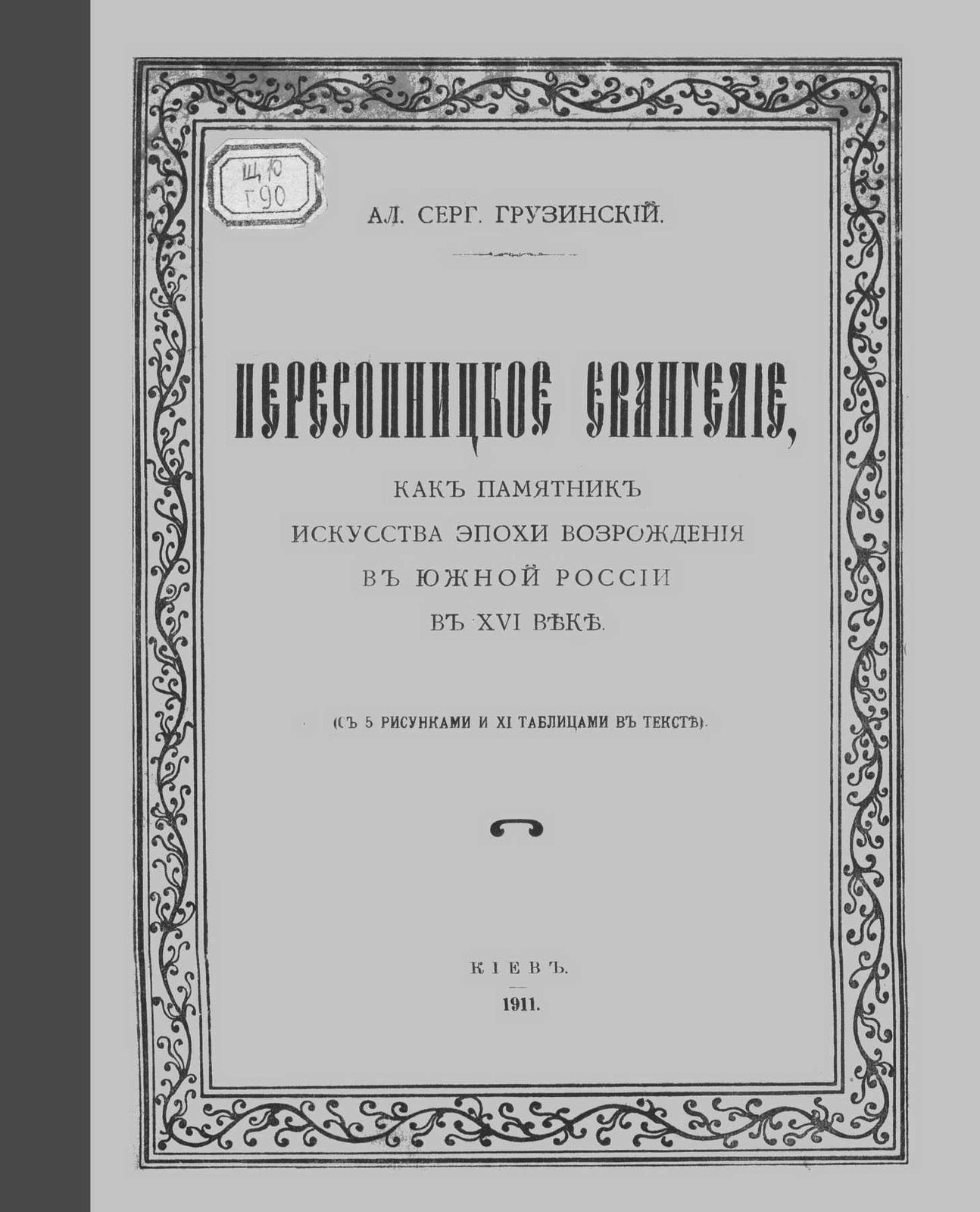
Титульный лист · Грузинский, «Пересопницкое Евангелие…», 1911
Sources & rights
- The manuscript (1556–1561) is public domain. Holder: Institute of Manuscript, V. I. Vernadsky National Library of Ukraine, fond I, no. 15512. Catalogue and digitisation. The library’s own images are marked «all rights reserved», so we link to them and do not reproduce them.
- Text lines: П. И. Житецкий, Описаніе Пересопницкой рукописи XVI в. съ приложеніемъ текста Евангелія отъ Луки, выдержекъ изъ другихъ евангелистовъ и 4-хъ страницъ снимковъ. Кіевъ: Унив. тип., 1876 (offprint from the Труды of the 3rd Archaeological Congress, Kyiv 1874). Public domain (1876; the author died in 1911). Scan: archive.org/details/zhitetski1876.
- Black-and-white plates: Zhytetsky 1876 (above), and А. С. Грузинскій, Пересопницкое Евангеліе, какъ памятникъ искусства эпохи Возрожденія въ Южной Россіи въ XVI вѣкѣ, Кіевъ 1911. Public domain (1911; the author died in 1930). Scan: Wikimedia Commons, from World Digital Library item 10018.
- Colour pages: Wikimedia Commons files tagged public domain as faithful reproductions of the 16th-century manuscript (PD-Art). Their sources are named in each caption (Ya. P. Zapasko 1995; archives.gov.ua; istpravda.com.ua). A modern photograph of a flat public-domain page generally carries no new copyright. Ukraine’s rule on this has not been tested in court, so these files are used as tagged on Commons and credited.
- Facts in the introduction are cited inline to Zhytetsky 1876, the NBUV record, SESDIVA and Igor Sikorsky Kyiv Polytechnic Institute. The prose is our own. SESDIVA’s images need written permission, so none is used.
- Not used: the 2001 transliterated edition (Kyiv, NAS of Ukraine) and modern Ukrainian translations. They are in copyright. The 2001 edition served only to cross-check folio numbers.
Изображения: источники и права. Подписи под иллюстрациями короткие; откуда взята каждая страница и на каких условиях — здесь, со ссылкой на файл.
- Reproduction via istpravda.com.ua; Wikimedia Commons. Лицензия: общественное достояние (PD-Art: faithful photographic reproduction of a 1556–1561 manuscript; tagged Public domain on Wikimedia Commons). Иллюстрации: Запись писца и поздняя надпись о Мазепе.
- P. I. Zhytetsky, Opisanie Peresopnitskoi rukopisi XVI v., Kyiv 1876 (scan: Internet Archive zhitetski1876, via Wikimedia Commons). Лицензия: общественное достояние (published 1876; author d. 1911). Иллюстрации: Послесловие к Луке и начало заключительного, Начертания букв и образец устава, Мф 19:1 и краткое изложение в рамке, Образцы из Евангелия от Луки, Титульный лист.
- A. S. Gruzinsky, Peresopnitskoe Evangelie kak pamiatnik iskusstva epokhi Vozrozhdeniia, Kyiv 1911 (scan: World Digital Library 10018 / Library of Congress, via Wikimedia Commons). Лицензия: общественное достояние (published 1911; author d. 1930; tagged PD on Commons). Иллюстрации: Последняя страница рукописи, л. 482 об., Лист 82 в натуральную величину, Евангелист Марк, миниатюра, Евангелист Лука, миниатюра, Иоанн Богослов и Прохор, Начало Евангелия от Иоанна, Лист 2 с заставкой и вязью, Миниатюра Матфея с орнаментом, Первая страница Евангелия от Марка, л. 129, Лист 279 в натуральную величину, Титульный лист.
- archives.gov.ua; Wikimedia Commons. Лицензия: общественное достояние (PD-Art: faithful photographic reproduction of a 1556–1561 manuscript; tagged Public domain on Wikimedia Commons). Иллюстрации: Евангелист Матфей, миниатюра.
- Wikimedia Commons (transferred from ru.wikipedia). Лицензия: общественное достояние (PD-Art: faithful photographic reproduction of a 1556–1561 manuscript; tagged Public domain on Wikimedia Commons). Иллюстрации: Мф 19:1, «въ оукраины иоудейскыѧ».
- Ya. P. Zapasko, Pamiatky knyzhkovoho mystetstva, Lviv 1995 (reproduction); Wikimedia Commons. Лицензия: общественное достояние (PD-Art: faithful photographic reproduction of a 1556–1561 manuscript; tagged Public domain on Wikimedia Commons). Иллюстрации: Начало Евангелия от Марка.
- Ya. P. Zapasko, 1995 (reproduction); Wikimedia Commons. Лицензия: общественное достояние (PD-Art: faithful photographic reproduction of a 1556–1561 manuscript; tagged Public domain on Wikimedia Commons). Иллюстрации: Лк 15:32–16:1 с глоссой в рамке, Иоанн и Прохор, миниатюра в цвете.


