

This is the second post in a slow read through Francysk Skaryna’s printed Bible, one span at a time. You are reading L1, a reading for anyone. The L0 tab holds what Skaryna printed, in the original spelling, with the 1517 pages beside the lines printed on them.
The second book off the press
The Psalter was dated 6 August 1517. The next book Skaryna finished in Prague was the Book of Job. The Russian State Library copy, now on Wikimedia Commons, is catalogued with the date 10 September 1517: a small quarto of about fifty leaves. We follow the order in which he printed, so Job comes next.
Why Job, so soon after the psalms? Skaryna does not say it in so many words, but his preface points in one direction. The Psalter was a book for prayer and for learning to read. Job is a book for trouble.
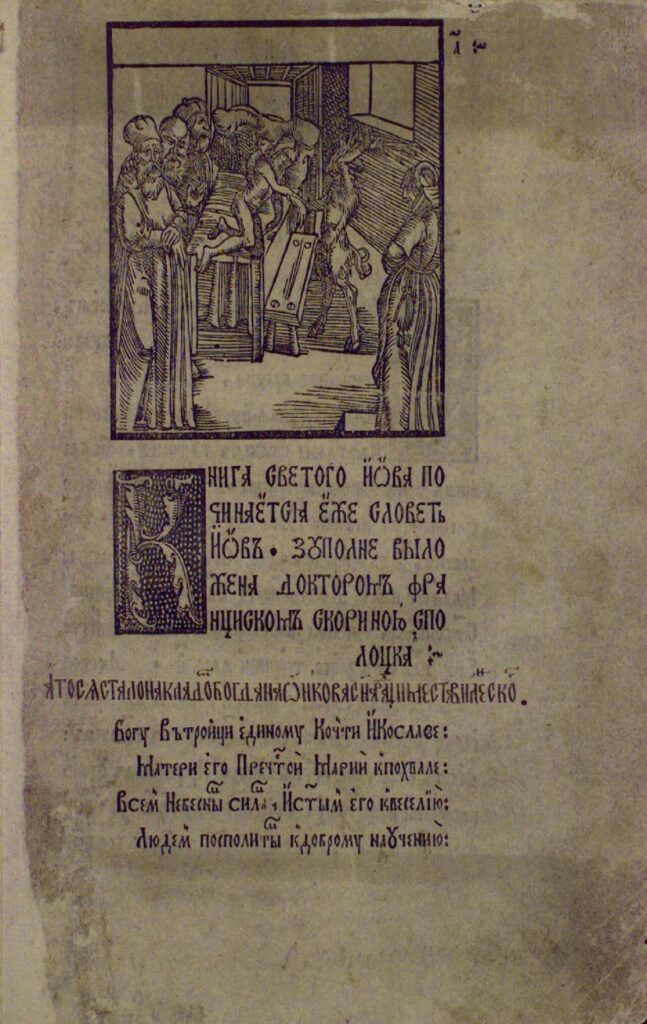
The title leaf announces Книга светого Иова, “the book of holy Job”, and adds that it has been “set out in full” by “doctor Francysk Skaryna of Polotsk”. As in the Psalter, he puts his name and his town on the book, and his profession is again medicine.
What the preface promises
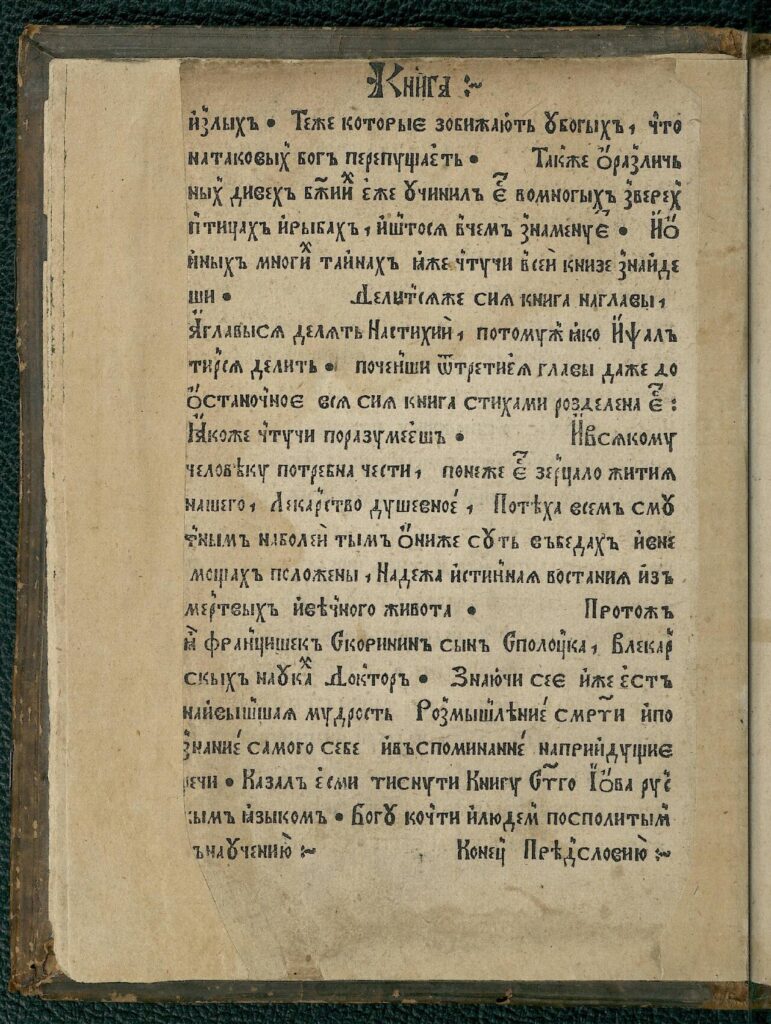
We do not yet have an open transcription of Skaryna’s preface to Job in full, so it is not in L0. The 19th-century scholar P. V. Vladimirov quotes long passages from it, and they show what Skaryna thought the book was for.
He begins with patience. The apostle James had held up Job as the model of it, and Skaryna tells his reader that if you want to know how much Job endured, you should read this book often, and then you will agree that the apostle spoke the truth.
Then he lists the “great mysteries” that God opened through Job. The list is a set of hard questions:
- why good and just people meet misfortune and sickness, while the wicked and unjust get luck and health;
- the poor and bitter life of people in this world;
- how the good and the wicked end;
- what God allows to happen to those who wrong the poor;
- and the wonders of God in beasts, birds and fish.
He does not answer them in the preface. He sends the reader to the book.
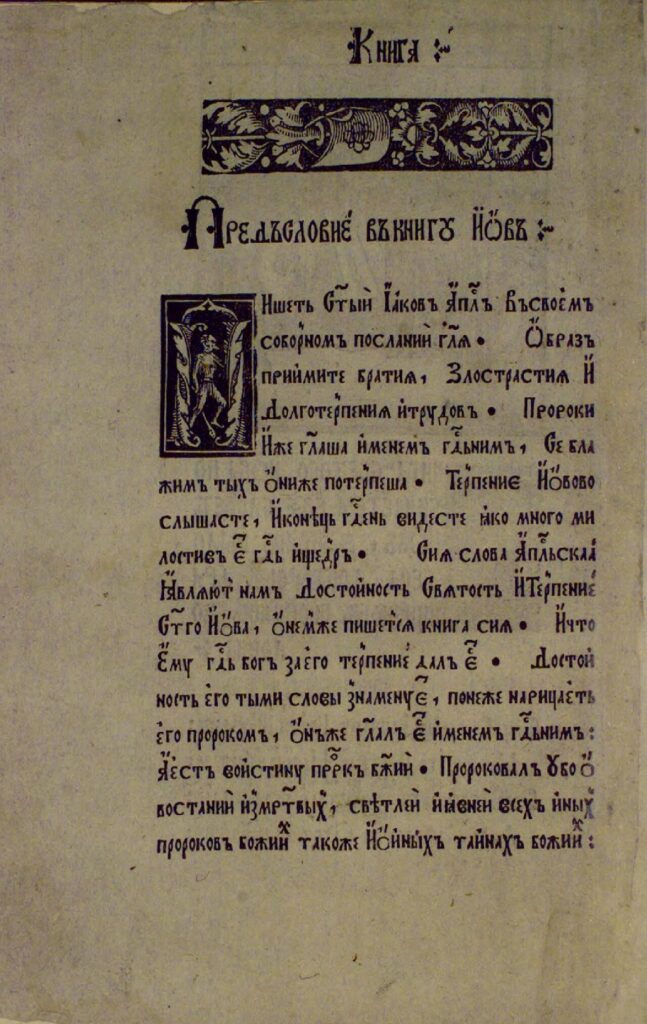
The close of the preface is the part a doctor would write. Skaryna calls the book a mirror of our life and a medicine for the soul. He calls it a comfort to all who are sad, and above all to those who are in misfortune and illness. Then he names himself once more, “son of Skaryna, of Polotsk, doctor in the medical sciences”, and gives his reason for printing it: he knows that the highest wisdom is to think about death, to know yourself, and to remember what is to come.
It is a striking thing for a printer to put on the first leaves of a book. The Psalter preface sold the psalms as useful for everyone. The Job preface is addressed to people who are suffering, and it is signed by someone whose trade was treating the sick.
Chapter one, as he printed it
The L0 layer this time is the whole of chapter 1, together with the short summary Skaryna printed above it. The summary says the chapter tells how rich Job was, about his children and their feasts, and how the devil, with God’s permission, destroyed everything he had.
The chapter itself is the famous one. There is a man in the land of Uz whose name is Job, blameless and upright, who fears God and turns away from evil. He has seven sons and three daughters, seven thousand sheep, three thousand camels, five hundred yoke of oxen, five hundred she-asses. His sons hold feasts in turn, and after every round of feasting Job rises early and offers a sacrifice for each of them, in case they have sinned in their hearts.
Then the scene moves to heaven. The angels come before the Lord, and the devil comes with them. “Where have you come from?” “From going around the earth.” God points to Job, and the devil answers with the sharpest question in the book: does Job fear God for nothing? Take away what he has, and he will curse you to your face.
What follows is told in four almost identical blows. A messenger arrives: the oxen and asses are taken by raiders and the servants killed, “and I alone escaped to tell you”. While he is still speaking another comes: fire from heaven has burned the sheep and the shepherds. Then a third: the Chaldeans have driven off the camels. Then a fourth: a great wind from the desert has struck the house where Job’s children were feasting, and they are all dead.
Job tears his robe, cuts off his hair, throws dust on his head, falls to the ground and worships. Skaryna prints his answer like this:
Нагъ изыдохъ из’чрѣва мт҃ри моеѧ, инагъ навращусѧ тамо. Гд҃ь богъ далъ, гд҃ь богъ в’залъ.
The chapter ends with the line the whole book will test: in all of this Job did not sin with his lips, and said nothing foolish against God.
Whose words are these?
This is where Skaryna’s Job gets interesting for anyone who wants to know how he worked. Vladimirov compared chapter 1 with older Slavonic texts and printed them after it in his appendix. His conclusion was that for this chapter Skaryna did not make a new translation. He copied an existing Church Slavonic text with only small changes, just as he did for the first chapters of Genesis. The closest match Vladimirov found was the Job reading in the Flowery Triodion printed by Fiol in Kraków in 1491.
Skaryna himself gives a hint. His preface says that the book is divided into verses “from the third chapter to the end”. Vladimirov takes this seriously: the first two chapters were left undivided because they came into the book in a different way from the rest.
In the same appendix Vladimirov sets words from the Czech Bible of 1506 in brackets next to Skaryna’s, to show where the two run close. For example, the great wind comes нагле, “suddenly”, where the Czech has nahle (Vladimirov’s spelling). We removed those brackets from L0, because they are Vladimirov’s comparison and not what Skaryna printed.
Reading the L0 layer
- The source. The text is Vladimirov’s 1888 printing of chapter 1, which is in the public domain. We proofread it against his page images, and where the 1517 pages survive we checked it against them. The wording agrees, but Vladimirov’s spelling of a few letters (у/ꙋ, а/ѧ) does not always follow the 1517 print.
- The page photographs. They come from the Russian State Library copy. That copy has lost the leaf with the chapter summary and the first two verses, and so has the other open scan on Commons. The first block of L0 therefore has no photograph. The next page in this copy is a repaired leaf, with the text on a pasted strip.
- Help us check it. Nobody has yet checked this transcription letter by letter. If you read early Cyrillic and spot a mistake, tell us.
Next time we move on to the third book Skaryna printed.
Источники и права
Иллюстрации — страницы печатных изданий Скорины по открытым сканам.
- Francysk Skaryna, Book of Job, Prague 1517. Wikimedia Commons File:Книга Иова (1517).pdf (credit: bible.ucoz.com). Лицензия: общественное достояние. Страницы скана: 2, 3.
- Francysk Skaryna, Book of Job, Prague 1517. Russian State Library copy via НЭБ (rusneb.ru/catalog/000199_000009_012408527/), Wikimedia Commons. Лицензия: общественное достояние. Страницы скана: 10.
V. 329Поведаеть ꙗко богатъ былъ светый Иѡвъ.Иѡчадехъ его Иѡпированіи ихъ Икако диꙗволъ здопꙋщениꙗ божиꙗ погꙋбилъ все имение его.Ичада его:~Глава а҃:~
¶2
Человѣкъ некый беше въстране Ꙋсвитид’стей именемъ Иовъ.Ибѣше человѣкъ той непороченъ иправеденъ благочестивъ, Иистиненъ.Боѧисѧ бога Иꙋдалѧисѧ ѿвсѧкого з’ла дела.Бе→
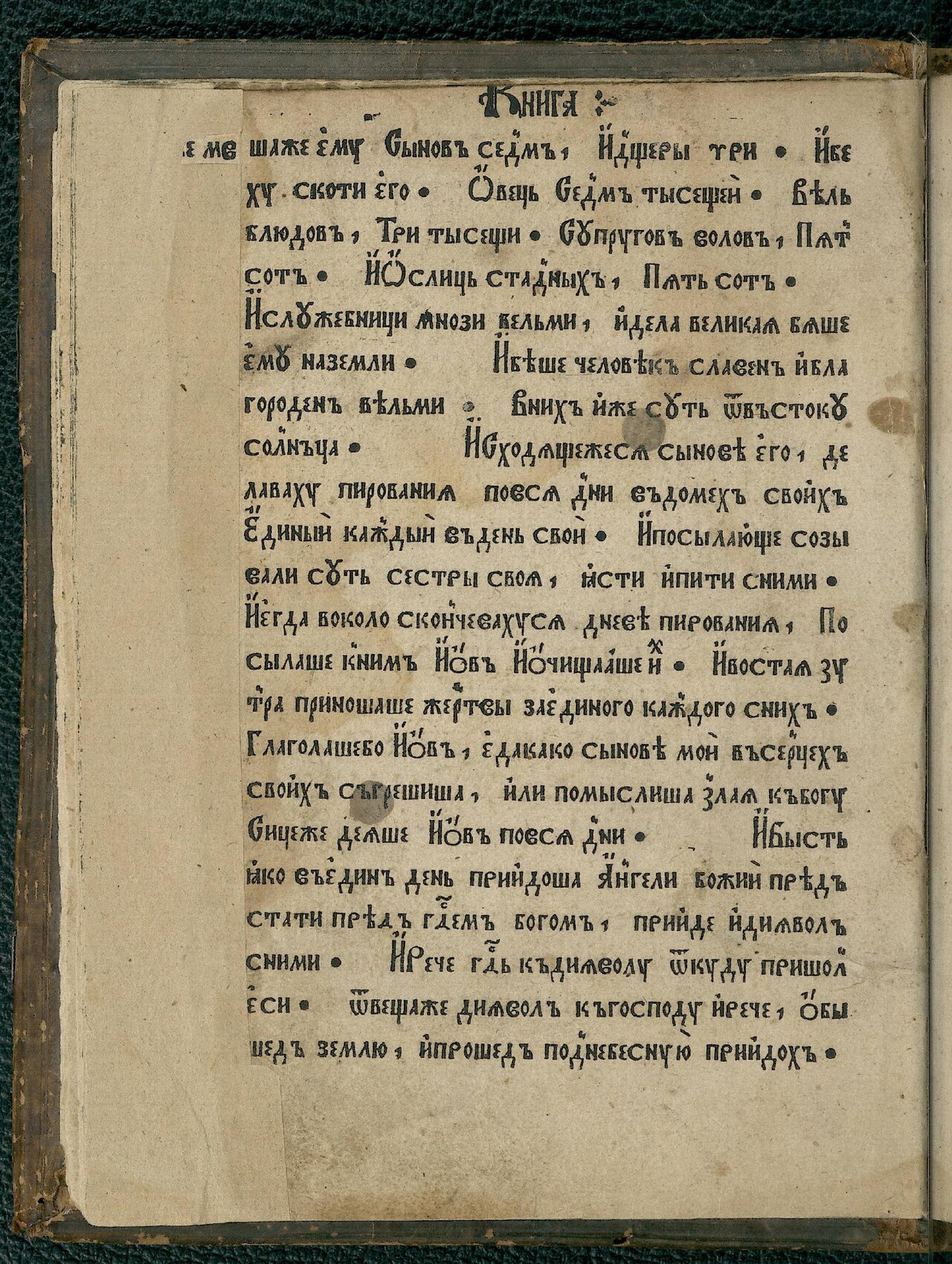
шаже ему Сыновъ сед’мъ, Ид’щеры три.Ибеху скоти его.Ѡвець Сед’мъ тысещей.Вѣльблюдовъ, Три тысещи, Сꙋпруговъ воловъ, Пѧт’сотъ.И Ѡслиць стад’ныхъ, Пѧть сотъ.Ислꙋжебници мнози вельми, идела великаѧ баше емꙋ наземли.Ибѣше человѣкъ славенъ иблагороденъ вѣльми.Внихъ иже сꙋть ѿвъстокꙋ сол’нъца.ИСходѧщежесѧ сыновѣ его, делаваху пированиѧ повсѧ д’ни въдомехъ своихъ Единый каж’дый въдень свой.Ипосылающе созывали сꙋть сестры своѧ, ꙗсти ипити сними.Иегда воколо скон’чевахусѧ дневѣ пированиѧ, Посылаше к’нимъ Иовъ Иочищааше и.Ивостаѧ зут’ра приношаше жер’твы заединого каж’дого снихъ.Глаголашебо Иовъ, едакако сыновѣ мой въсер’цехъ своихъ съгрешиша, или помыслиша з’лаѧ къбогу Сицеже деаше Иовъ повсѧ д’ни.
¶3
ИБысть ꙗко въединъ день прийдоша Ан’гели божий прѣдъстати прѣдъ гд҃емъ богомъ, прийде идиаволъ сними.ИРече гд҃ь къдиаволу ѿкуду пришол’ еси.Ѿвещаже диаволъ къгосподу ирече, обышедъ землю, ипрошедъ под’небесную прийдохъ.
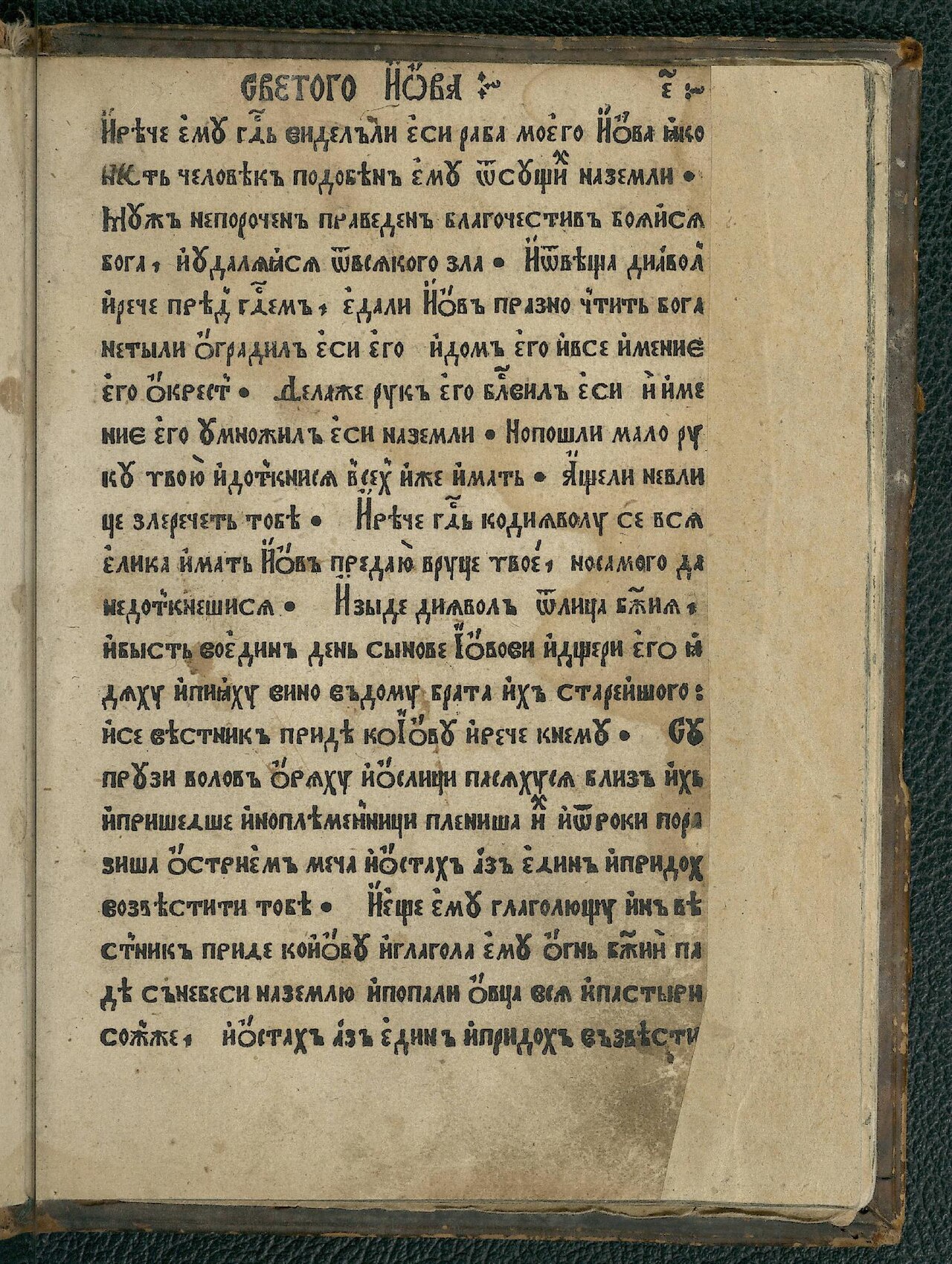
Ирѣче емꙋ гд҃ь виделъли еси раба моего Иова ꙗко несть человѣкъ подобѣнъ емꙋ ѿсꙋщий наземли.Мꙋжъ непороченъ праведенъ благочестивъ боѧисѧ бога, иꙋдалѧисѧ ѿвсѧкого зла.Иѿвѣща диавол’ ирече прѣд’ гд҃емъ, едали Иовъ празно ч’тить бога нетыли оградилъV. 330 еси его идомъ его ивсе имение его окрест’.Делаже рукъ его бл҃вилъ еси и имение его ꙋмножилъ еси наземли.Нопошли мало рукꙋ твою идот’книсѧ в’сех’ иже имать.Ащели невлице злеречеть тобѣ.Ирѣче гд҃ь кодиаволу се всѧ елика имать Иовъ предаю вруце твое, носамого данедот’кнешисѧ.
¶4
Изыде диаволъ ѿлица бж҃иѧ, ибысть воединъ день сынове Іовови идщери его ꙗдаху ипиꙗху вино въдому брата ихъ старейшого:исе вѣстникъ придѣ коІовꙋ ирече кнемꙋ.Сꙋпрꙋзи воловъ ораху иослици пасахусѧ близъ ихъ ипришедше иноплѣмен’ници плениша и иѿроки поразиша остриемъ меча иостахъ азъ единъ ипридох’ возвѣстити тобѣ.Иеще емꙋ глаголющу инъ вѣст’никъ приде коиовꙋ иглагола емꙋ огнь бж҃ий падѣ сънебеси наземлю иопали овца всѧ ипастыри сож’же, иостахъ азъ единъ ипридохъ възвѣсти→
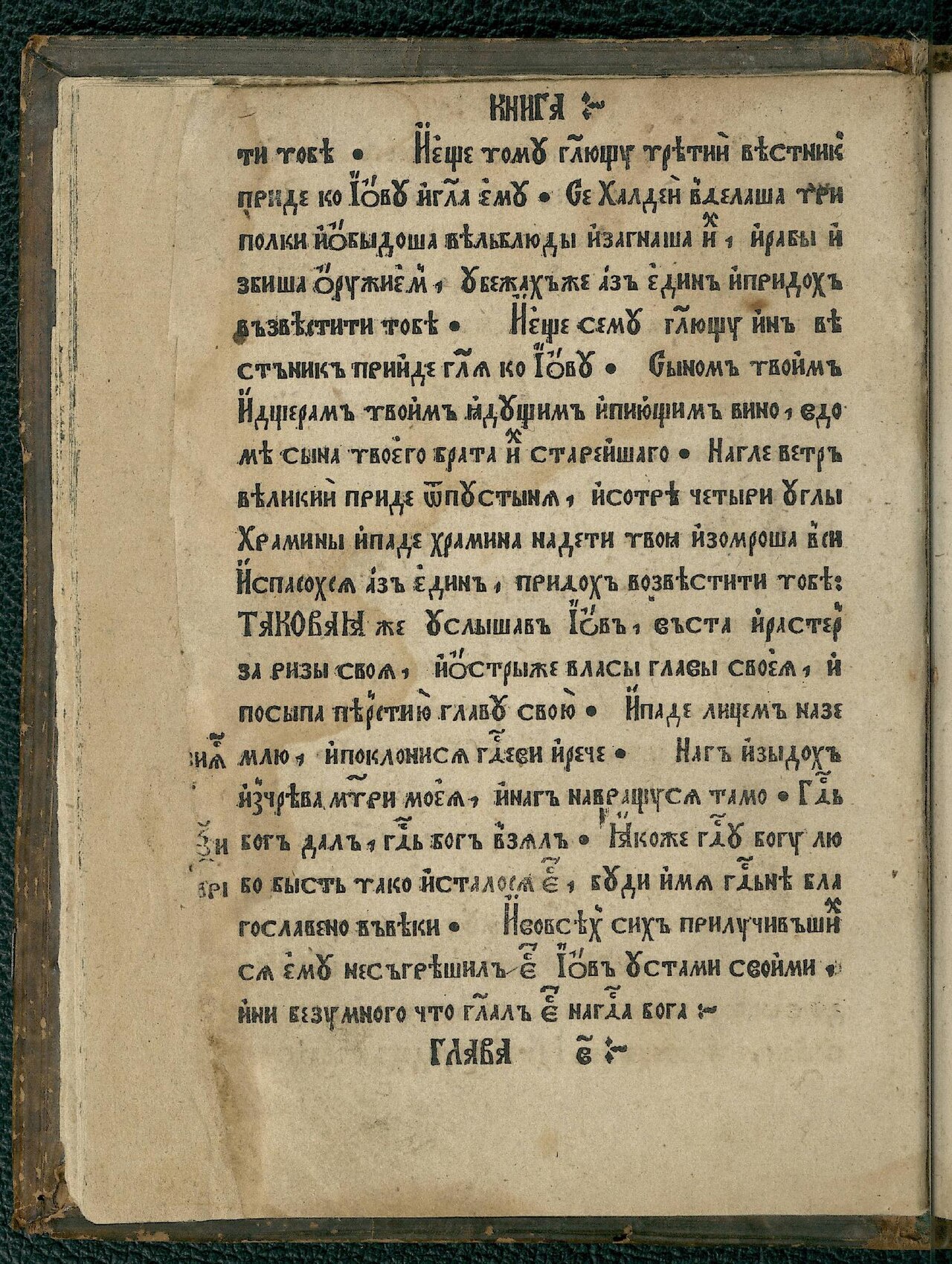
ти тобѣ.Иеще томꙋ гл҃ющу трѣтий вѣстник’ приде ко Іовꙋ игл҃а емꙋ.Се халдей в’делаша три полки иобыдоша вѣльблюды изагнаша и, ирабы избиша оружием’, ꙋбежахъже азъ единъ ипридохъ възвѣстити тобѣ.Иеще семꙋ гл҃ющу инъ вѣстъникъ прийде гл҃ѧ ко Іовꙋ.Сыномъ твоимъ Идщерамъ твоимъ ꙗдꙋщимъ ипиющимъ вино, вдомѣ сына твоего брата и старейшаго.Нагле ветръ вѣликий приде ѿпꙋстынѧ, исотрѣ четыри ꙋглы храмины ипаде храмина надети твоꙗ изомроша в’си Испасохсѧ азъ единъ, придохъ возвѣстити тобѣ:
¶5
ТАКОВАꙖ же ꙋслышавъ Іовъ, въста ирастер’за ризы своѧ, иострыже власы главы своеѧ, ипосыпа пер’стию главꙋ свою.Ипаде лицемъ наземлю, ипоклонисѧ гд҃еви ирече.Нагъ изыдохъ из’чрѣва мт҃ри моеѧ, инагъ навращусѧ тамо.Гд҃ь богъ далъ, гд҃ь богъ в’залъ.Ꙗкоже гд҃ꙋ богу любо бысть тако исталосѧ ест, бꙋди имѧ гд҃ьнѣ благославено въвѣки.Ивовсѣх’ сихъ прилучивъшисѧ емꙋ несъгрѣшилъ ест Іовъ ꙋстами своими, ини безумного что гл҃алъ ест на гд҃а бога:~
Text. This is chapter 1 of Francysk Skaryna’s Book of Job (Prague, 1517), with his chapter summary, as printed by
P. V. Vladimirov, Доктор Франциск Скорина: его переводы, печатные издания и язык (St Petersburg, 1888), appendix pp. 329–330
(public domain). Vladimirov’s bracketed Czech 1506 comparisons have been removed.
— How it was made. The ru.wikisource OCR (not proofread) was the starting point. Every word was then re-read against the 1888 page images, and lines 24–45 were checked against the 1517 print.
— Where L0 differs from 1517. The wording agrees. Vladimirov’s spelling of у/ꙋ and а/ѧ does not always match 1517, and L0 follows Vladimirov.
— Conventions. Word division, capitals and punctuation are Vladimirov’s. Titla are not expanded. Breathing marks and accents are omitted. The line breaks and the ¶1–¶5 breaks are editorial. A marker such as «V. 330» shows where page 330 of the 1888 book begins.
— Not yet checked by a person. No human has proofread this text. Uncertain readings are listed in the series notes.
Facsimile. Book of Job, Prague 1517, the Russian State Library copy (НЭБ, rusneb.ru 000199_000009_012408527),
via Wikimedia Commons. Public domain. This copy lacks the leaf with the chapter summary and verses 1–2, and its scan page 12 is
a repaired leaf. The second open scan on Commons lacks the same leaf.
Изображения страниц.
