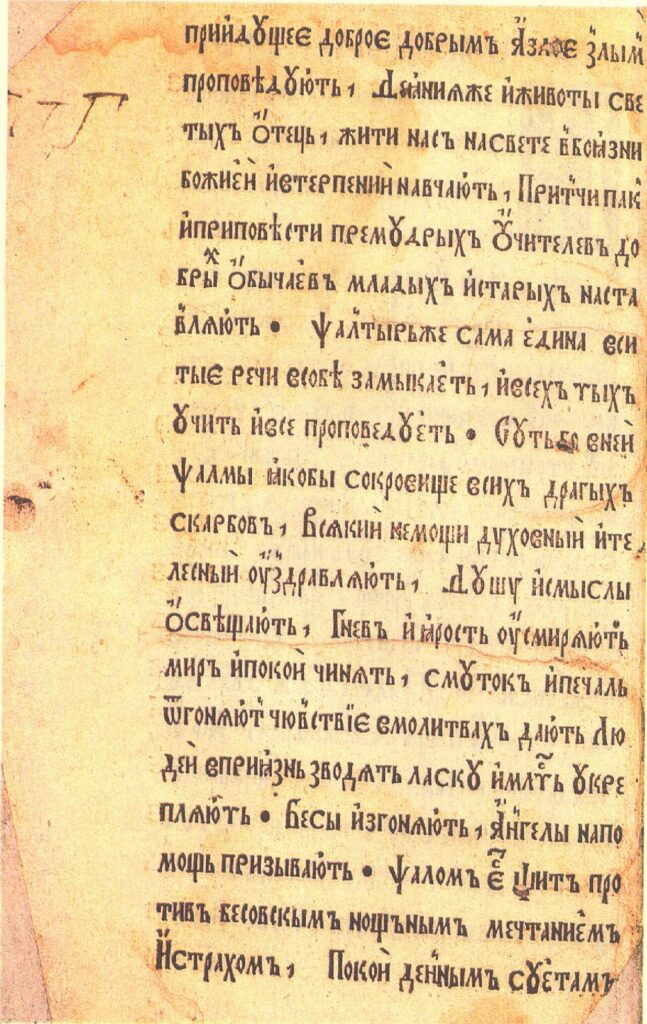
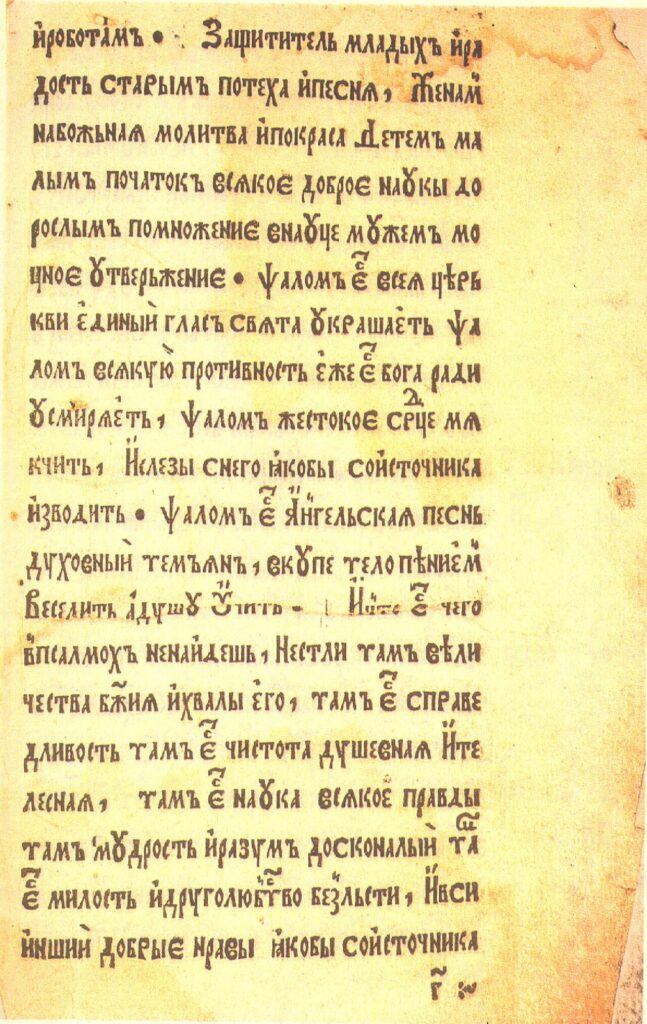
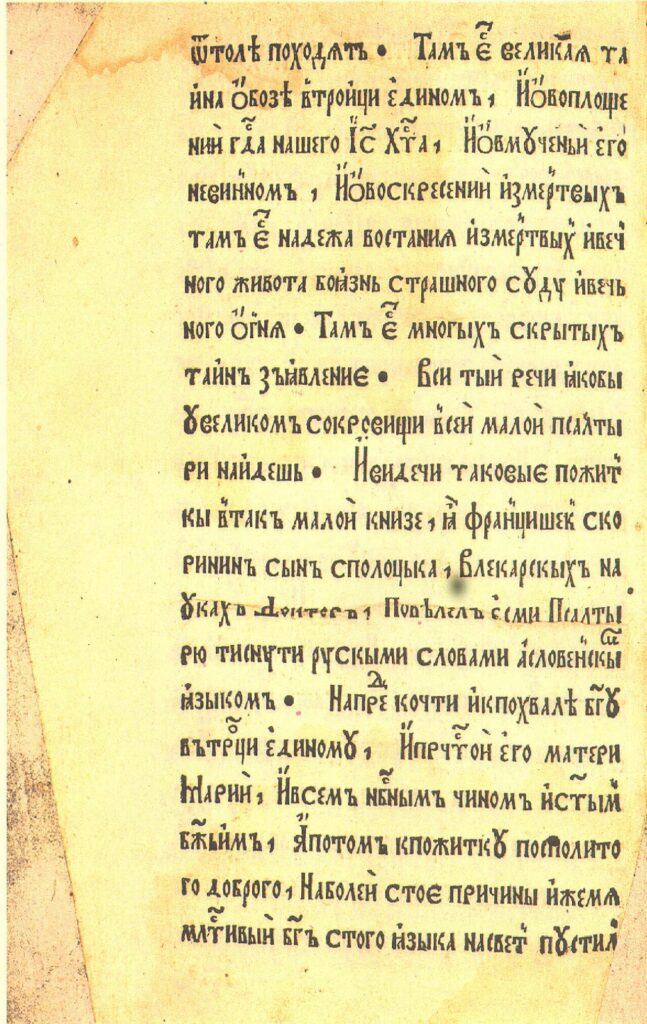
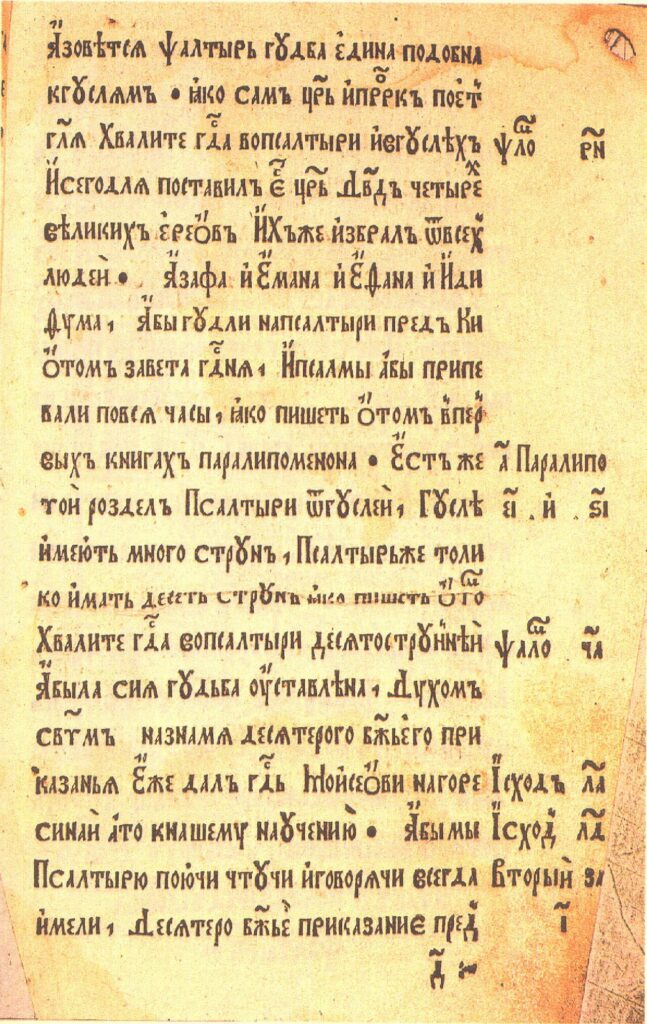
This is the first post in a slow read through Francysk Skaryna’s printed Bible, one span at a time. Each post has two layers. You are reading L1, a reading written for anyone. The L0 tab above holds what Skaryna actually printed, in its original spelling, with photographs of the 1517 pages.
Why start with the Psalter
Skaryna’s Bible was printed in Prague in instalments between 1517 and 1519, and it did not begin with Genesis. The first book off his press was the Psalter, dated 6 August 1517. It is a small quarto of 142 leaves. The 19th-century scholar P. V. Vladimirov, whose 1888 monograph is still the fullest public-domain study of these books, calls it the first thing Skaryna issued in Prague. We follow the order in which he printed, so we begin here.
By Vladimirov’s description the book has three parts. First comes a short preface. Then come the 150 psalms, followed by Psalm 151, which is marked as standing “outside the number”. Last is a set of ten canticles. This post reads the preface.
What the preface says
The preface is seven paragraphs long in our layout. It opens with Paul’s line that all scripture is inspired by God and useful for teaching, reproof and correction (2 Timothy 3:16–17). Skaryna then sorts scripture into its kinds: the Law, the prophets, the lives and deeds of the saints, the proverbs of the wise, and the songs. His point follows from that list. Each of the other books “holds one thing”, but the Psalter holds all of them at once.
What comes next is a list of what the psalms do for you, and it reads almost like an advertisement. They heal weakness of body and soul, calm anger, drive off sorrow, and bring people into friendship. They are a shield against night terrors and a rest from the day’s bustle. The list goes through the stages of a life: joy for the old, a prayer for women, and for small children початокъ всѧкое доброе наꙋкы, “the beginning of all good learning”.
The list is not wholly Skaryna’s own. Vladimirov showed that the first part of the preface is a free, shortened reworking of St Basil the Great’s homily on Psalm 1. Slavonic psalters of the time often printed that homily at the front. Skaryna kept Basil’s ideas and many of his phrases, and cut and reshaped them to fit his book. According to Vladimirov, the line about small children is one of the things Skaryna added himself. It fits what he says elsewhere: in his later preface to the whole Bible he tells anyone who wants to learn grammar to start with the Psalter, which was the first reading book in East Slavic schooling.
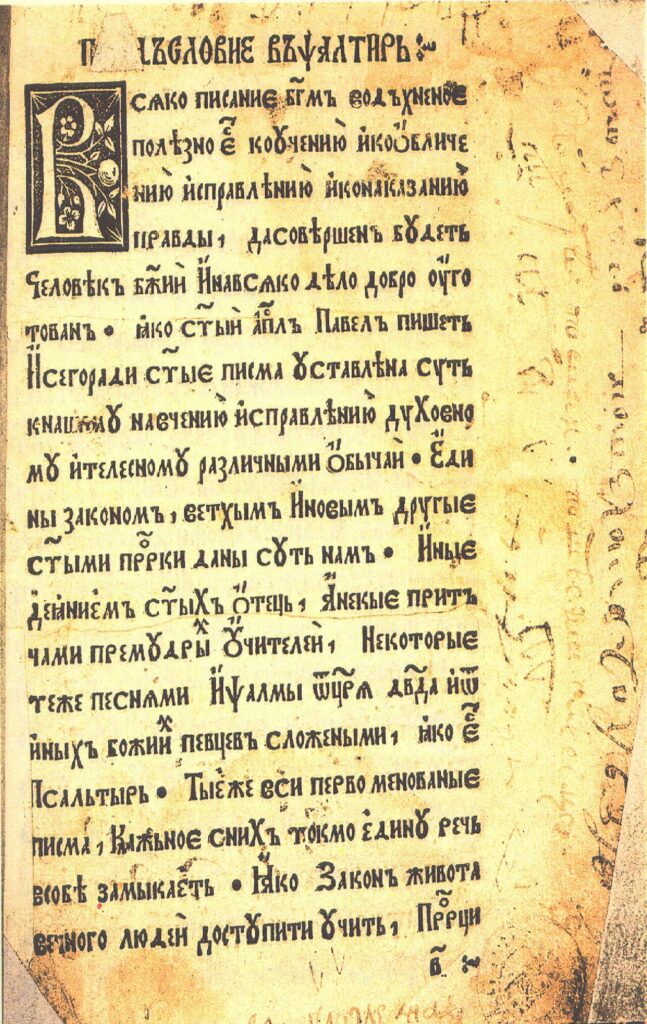
“I, Francysk, Skaryna’s son, of Polotsk”
In the fifth paragraph the borrowed voice stops and Skaryna speaks in his own person:
ꙗ фран’цишек’ скорининъ сынъ сполоцька, Влекарскыхъ наꙋкахъ Докторъ…
He says that seeing so much benefit in so small a book, he повѣлелъ (“ordered”, “had”) the Psalter printed, тиснути, which means pressed. He did not write it or copy it. He printed it in “Ruthenian words” and the Slavonic language. He gives his reasons in order. First, it is for the honour and praise of God, the Virgin and the saints. Then it is for the common good, посполитого доброго, and above all because God brought him into the world from that people.
Three things stand out in these lines. He gives his father’s name and his town, as someone who expects to be known. He gives his profession, and it is medicine, not the church. And he describes the book as a public good for his people, not only as an act of devotion.
Ten strings
The sixth paragraph explains the name псалтырь. It is the name of an instrument, “like the gusli”. The difference, Skaryna says, is that gusli have many strings and the psaltery has only ten. He reads those ten strings as the Ten Commandments given to Moses on Sinai. When we sing, read or recite the psalms, we should keep the commandments “before our eyes”. He also recalls the four chief singers King David appointed to play before the Ark (Asaph, Heman, Ethan and Jeduthun), citing the first book of Chronicles.
It is a neat piece of teaching. The title of the book becomes a reminder of the moral law.
A printer’s method, in his own words
The last paragraph is the one a printer would write, and it is the part I find most modern. Skaryna tells the reader what he has done to the book:
- In the margins he has placed references to chapters of other books of the Bible, “so that it may be known that all the other holy writings agree with the Psalter and one lights up another”. Vladimirov notes that Church Slavonic psalters did not have such references. They appear in all of Skaryna’s books, and later in the Ostrog Bible of 1580–81. He compares them to the Latin concordances.
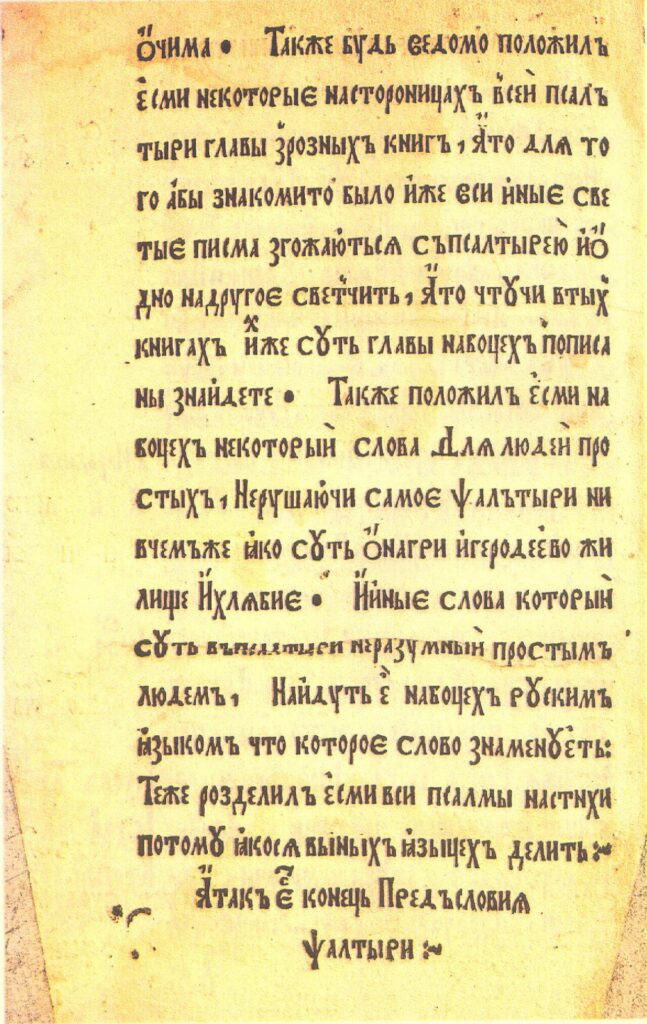
- Also in the margins, “for simple people”, he glosses hard words in the Ruthenian language. The examples he picks are онагри, игеродеево жилище and хлѧбие.
- He has divided the psalms into verses, “as is done in other languages”. Vladimirov notes that the verses are marked with large points, not numbers.
He also promises that none of this touches the text itself. He has worked нерушаючи самое ѱалътыри нивчемъже, “not disturbing the Psalter itself in anything”. The apparatus sits beside the text and leaves it alone. Readers who want the plain psalm have it, and readers who need help find it in the margin. It is a good principle for an annotated edition, then and now.
(When Skaryna reprinted this preface a few years later in Vilnius, in his Small Travel Book, he dropped this final paragraph entirely, according to Vladimirov.)
The pictures
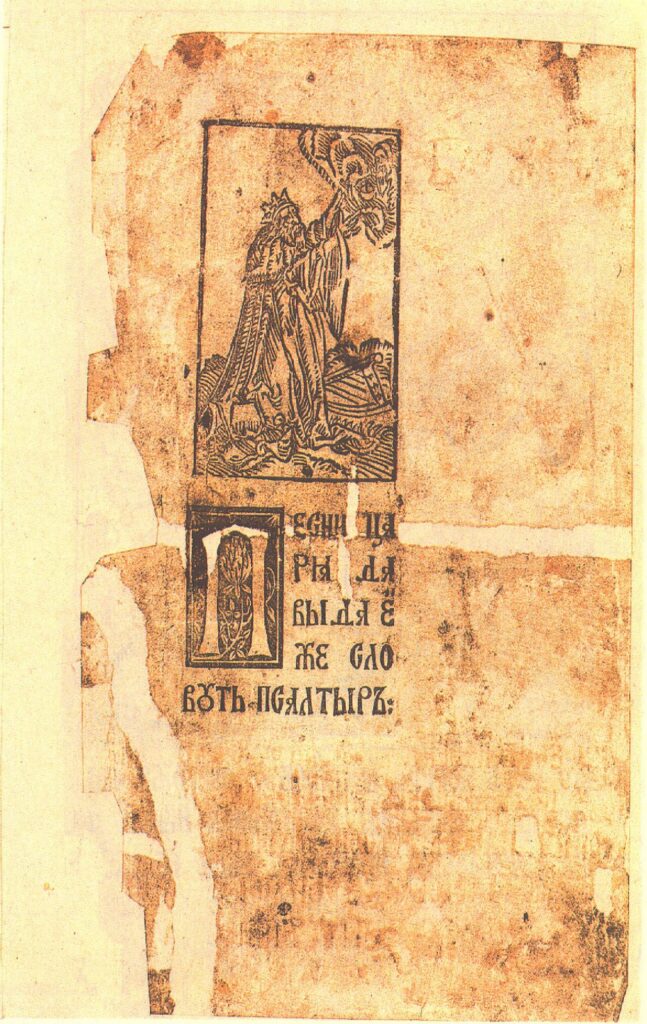
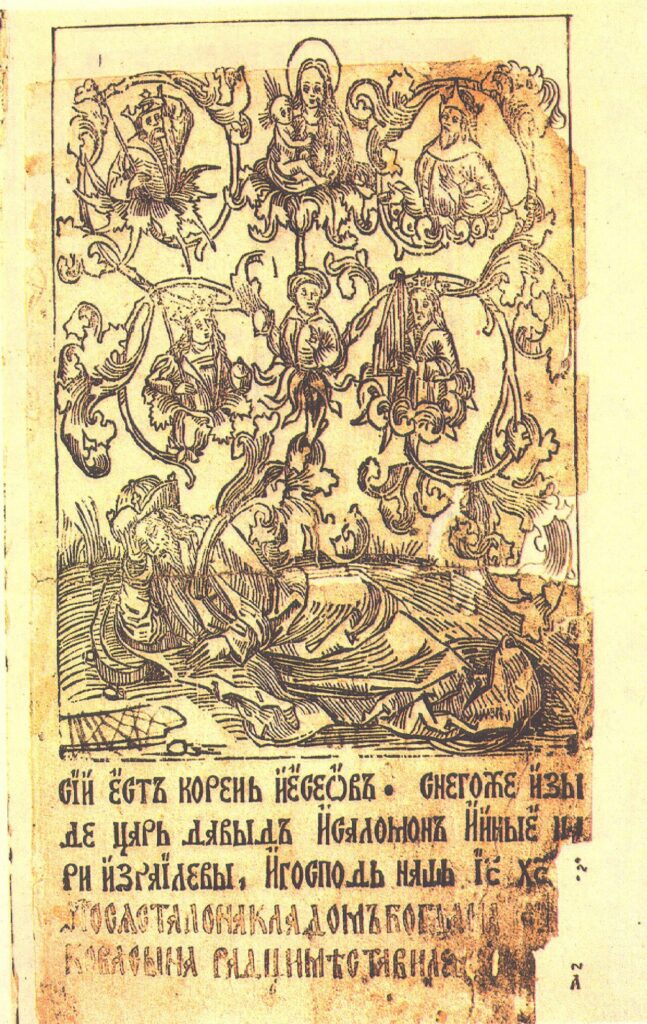
The copy photographed here, now in the Russian State Library, opens with a woodcut of the Tree of Jesse. After it comes the title, Песни царя Давыда еже словуть Псалтырь (“The songs of King David, which are called the Psalter”), under a woodcut of David. The preface itself begins with a large woodcut initial В.
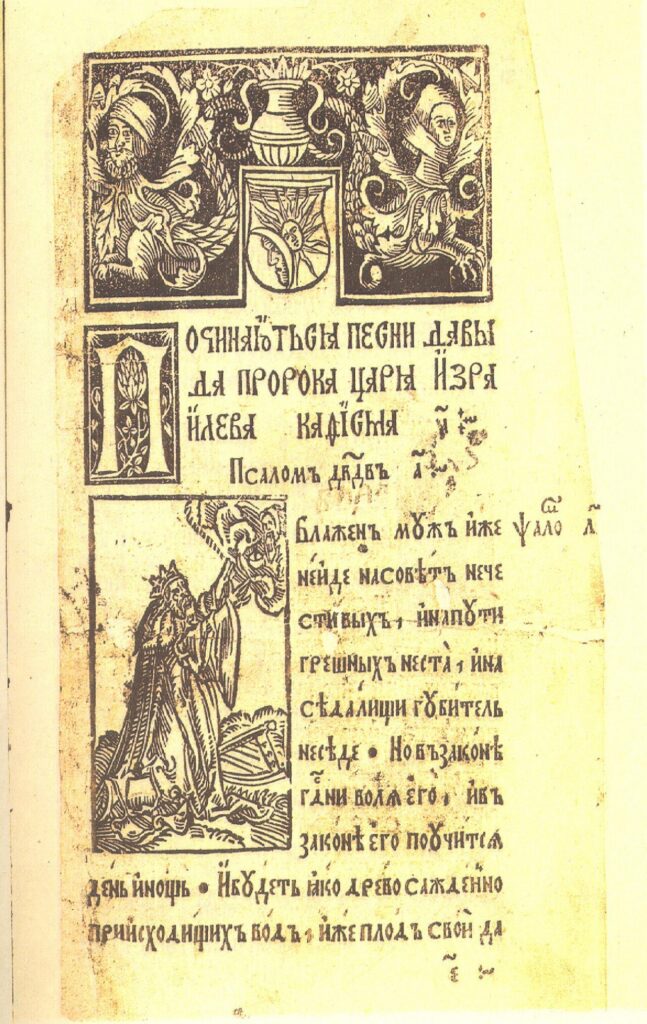
Where the psalms begin, a headpiece carries a small shield with a sun and a crescent moon. Vladimirov identifies this pairing of sun and moon as Skaryna’s own coat of arms. Below it are a woodcut initial П and, beside Psalm 1, David with his harp. We have not transcribed Psalm 1 yet. No open transcription in the original spelling exists, and we will not type one from memory, so for now it lives in the pictures.
Reading the L0 layer
Switch to L0 to read the preface as printed. Some notes on what you will see:
- The text is Vladimirov’s 1888 transcription, proofread against his page images and spot-checked against the 1517 pages shown under it. Skaryna runs words together (кнашемꙋ, “to our”), and we keep that.
- Abbreviations are left as printed: a titlo (҃) over a shortened sacred word, and small raised letters (ест for естъ, “is”).
- Line breaks and the ¶ numbers are ours. Small “V.” markers show where each page of the 1888 edition begins.
Next time we move on to the next book in the order Skaryna printed them.
V. 325Предъсловие въ ѱалтирь
¶2
Всѧко писание бг҃мъ водъхненое полѣзно ест коꙋчению икообличению исправлѣнию иконаказанию правды; дасовѣршенъ будеть Человѣкъ бж҃ий Инавсѧко дѣло добро оуготованъ.ꙗко ст҃ый ап҃лъ Павелъ пишеть Исегоради ст҃ые писма ꙋставлѣна сꙋть кнашемꙋ навчению исправлѣнию духовномꙋ ителесномꙋ различными обычай.Едины закономъ, ветхымъ иновымъ другые ст҃ыми пр҃рки даны сꙋть намъ.Иные деꙗниемъ ст҃ыхъ отець, Анекые притъчами премꙋдрых ꙋчителей; некоторые теже песнѧми Иѱалмы ѿцр҃ѧ дв҃да иѿиныхъ божий певцевъ сложеными, ꙗко ест Псальтырь.
¶3
Тыеже вси первоменовеные писма, Кажьное снихъ токмо единꙋ речь всобѣ замыкаеть.Ꙗко Законъ живота вечного людей достꙋпити ꙋчить, Пр҃рци приидущее доброе добрымъ Азлое злым’ проповѣдують, Деꙗниѧже иживоты светыхъ отець, жити насъ насвете в’ богазни божией ивтерпений навчають, Прит’чи пак’ иприповѣсти премꙋдрыхъ Ꙋчителевъ добрых обычаевъ младыхъ истарыхъV. 326 настав’лѧють.ѱал’тырь же сама едина вси тые речи всобѣ замыкаеть, ивсехъ тыхъ ꙋчить и все проповедꙋеть.Сꙋть бо вней ѱалмы ꙗкобы сокровище всихъ драгыхъ скарбовъ Всѧкий немощи духовный ителесный оуз’дравлѧють, Дꙋшу исмыслы освѣщають, Гневъ и ꙗрость оусмирѧють миръ ипокой чинѧть, смꙋтокъ и печаль ѿгонѧют, чюв’ствие вмолитвахъ дають Людей вприꙗзнь зводѧть ласкꙋ имл҃ть ꙋкреплѧють.Бесы изгонѧють, Ан’гелы напомощь призывають.ѱаломъ ест Щитъ противъ бесовскымъ нощънымъ мечтаниемъ Истрахомъ, Покой ден’нымъ сꙋетамъ ироботамъ.Защититель младыхъ ирадость старымъ потеха ипеснѧ, Женам’ набожьнаѧ молитва ипокраса Детемъ малымъ початокъ всѧкое доброе наꙋкы дорослымъ помножение внаꙋце мужемъ моцное ꙋтверьжение.ѱаломъ ест всеѧ цѣрькви единый гласъ свѧта ꙋкрашаеть ѱаломъ всѧкую противность еже ест бога ради ꙋсмирѧеть.ѱаломъ жестокое ср҃це макчить, Ислезы снего ꙗкобы соисточника изводить.ѱаломъ ест Ан’гельскаѧ песнь духовный темъѧнъ, вкꙋпе телопѣнием’ Веселить адушꙋ ꙋчить.И ч’то ест чего в’ псалмохъ ненайдешь, Нестли тамъ вѣличества бж҃иѧ ихвалы его, тамъ ест справедливость тамъ ест чистота душевнаѧ Ителеснаѧ, тамъ ест наꙋка всѧкое правды тамъ мꙋдрость иразумъ досконалый там ест милость идруголюб’ство без’льсти, Ивси иншии добрые нравы ꙗкобы соисточника ѿтолѣ походѧть.
¶4
Тамъ ест великаѧ тайна обозѣ в’ троици единомъ, Иовоплощений гд҃а нашего Іс҃ Хр҃та, Иовмучений его невин’номъ, Иовоскресений измер’твыхъ тамъ ест надежа востаниѧ измер’твых’V. 327 ивеч’ного живота богазнь страшного сꙋду ивечьного ог’нѧ.Тамъ ест многыхъ скрытыхъ тайнъ зъꙗвление.Вси тый речи ꙗкобы ꙋвеликомъ сокровищи в’сей малой псалтыри найдешь.
¶5
Ивидечи таковые пожит’кы в’такъ малой книзе, ꙗ фран’цишек’ скорининъ сынъ сполоцька, Влекарскыхъ наꙋкахъ Докторъ Повѣлелъ есми Псал’тырю тиснути рꙋскыми словами асловен’скым ꙗзыкомъ.Напред кочти икпохвалѣ бг҃ꙋ вътроци единомꙋ, Ипрч҃той его матери Марий, Ивсемъ нб҃нымъ чиномъ ист҃ым’ бж҃ьимъ, Апотомъ кпожиткꙋ посполитого доброго, Наболей стое причины ижемѧ мл҃тивый бг҃ъ стого ꙗзыка насвет’ пꙋстил’
¶6
Азовѣтсѧ ѱалтырь гꙋдба едина подобна кгꙋслѧмъ.ꙗко самъ цр҃ь ипр҃ркъ поет’ гл҃ѧ хвалите гд҃а вопсалтыри ивгꙋслѣхъ Исегодлѧ поставилъ ест цр҃ь Дв҃дъ четырех вѣликихъ ереовъ Ихъже избралъ ѿвсех’ людей.Азафа и Емана и Еѳана и Идиѳума, Абы гꙋдли напсалтыри предъ Киотомъ завета гд҃на, Ипсалмы абы припевали повсѧ часы, ꙗко пишеть отомъ в’пер’выхъ книгахъ паралипоменона.Естъже той розделъ Псалтыри ѿгꙋслей, Гꙋслѣ имеють много струнъ, Псалтырьже толико имать десеть стрꙋнъ ꙗко пишеть ото хвалите гд҃а вопсалтыри десѧтострꙋннѣй Абыла сиѧ гꙋдьба оуставлѣна, Духомъ св҃тмъ назнамѧ десѧтерого бж҃ьего приказаньѧ Еже далъ гд҃ь Мойсеови нагоре синай ато кнашему наꙋчению.Абымы Псалтырю поючи чтꙋчи иговорѧчи всегда имели, Десѧтеро бж҃ье приказаниеV. 328 пред’очима.
¶7
Такжебудь ведомо положилъ есми некоторые настороницахъ в’сей псалътыри главы з’розныхъ книгъ, Ато длѧ того абы знакомито было иже в’си иные светые писма згожаютьсѧ съпсалтырею иодно надругое свет’чить, Ато чтꙋчи втых’ книгахъ иже сꙋть главы набоцехъ пописаны знайдете.Также положилъ есми набоцехъ некоторый слова Длѧ людей простыхъ, нерушаючи самое ѱалътыри нивчемъже ꙗко сꙋть онагри игеродеево жилище Ихлѧбие Ииные слова который сꙋть впсалтыри неразумный простымъ людемъ, найдуть е набоцехъ рꙋскимъ ꙗзыкомъ что которое слово знаменꙋеть.Теже розделилъ есми вси псалмы настихи потомꙋ ꙗкосѧ выныхъ ꙗзыцехъ делить:— Атакъ ест конець предъсловиѧ ѱалтыри:
Text. Francysk Skaryna, preface to the Psalter (Prague, 6 August 1517), as printed in the transcription of
P. V. Vladimirov, Доктор Франциск Скорина: его переводы, печатные издания и язык (St Petersburg, 1888),
appendix pp. 325–328 (public domain). We proofread it word by word against the 1888 page images and spot-checked
about 5 of the 30 lines against the 1517 print. One reading, вътроци, is taken from 1517.
Skaryna’s word division and capitals are kept as Vladimirov prints them. The punctuation is Vladimirov’s.
The ¶1–¶7 breaks and the one-sentence-per-line layout are editorial. Titla are not expanded. Breathing marks
and accents are omitted. A marker such as «V. 326» shows where page 326 of the 1888 book begins. Uncertain
readings are recorded in the series notes.
Facsimile. Psalter, Prague 1517, the Russian State Library copy (НЭБ, rusneb.ru 000199_000009_004110492),
via Wikimedia Commons, File:Псалтирь (1517).pdf. Public domain. The folio numbers are inferred from the page order
and were not read from the print.